Wausau Downtown Airport almost wasn’t here. In a different timeline, the runways were paved over, the hangars sold off, and the 80-some private planes that call the field home had to find somewhere else to land. The reason that didn’t happen has a name: Marie Towle. The reason her story still matters has a different name: a small group of teenagers learning to fly through a program she would have loved.
Today, students in the Learn Build Fly program are using a flight simulator to log virtual hours over the same runway Marie defended for three decades. They’re building airplanes by hand, exploring welding and woodworking, and stepping into a cockpit before they’re old enough to drive. The tools have changed. The mission hasn’t.
Here’s how a flight simulator, a 16-year-old soloist’s legacy, and a community-run airport are quietly building Wisconsin’s next generation of pilots.
Who Was Marie Towle, and Why Wausau Still Has an Airport
The Wausau Downtown Airport is one of Wisconsin’s oldest. It served commercial flights until 1969, when Central Wisconsin Airport opened nearby and absorbed the regional traffic. After that, plenty of small-city airports across the country quietly faded out. Wausau’s didn’t.
Marie Towle was the reason. At 16, she became the youngest female solo pilot in the country. She and her husband Lyle ran Grimm Flying Service at the airport for three decades. When the field’s future came under threat, Marie ran a public campaign to keep it open. She convinced city leaders. She convinced her neighbors. She won.
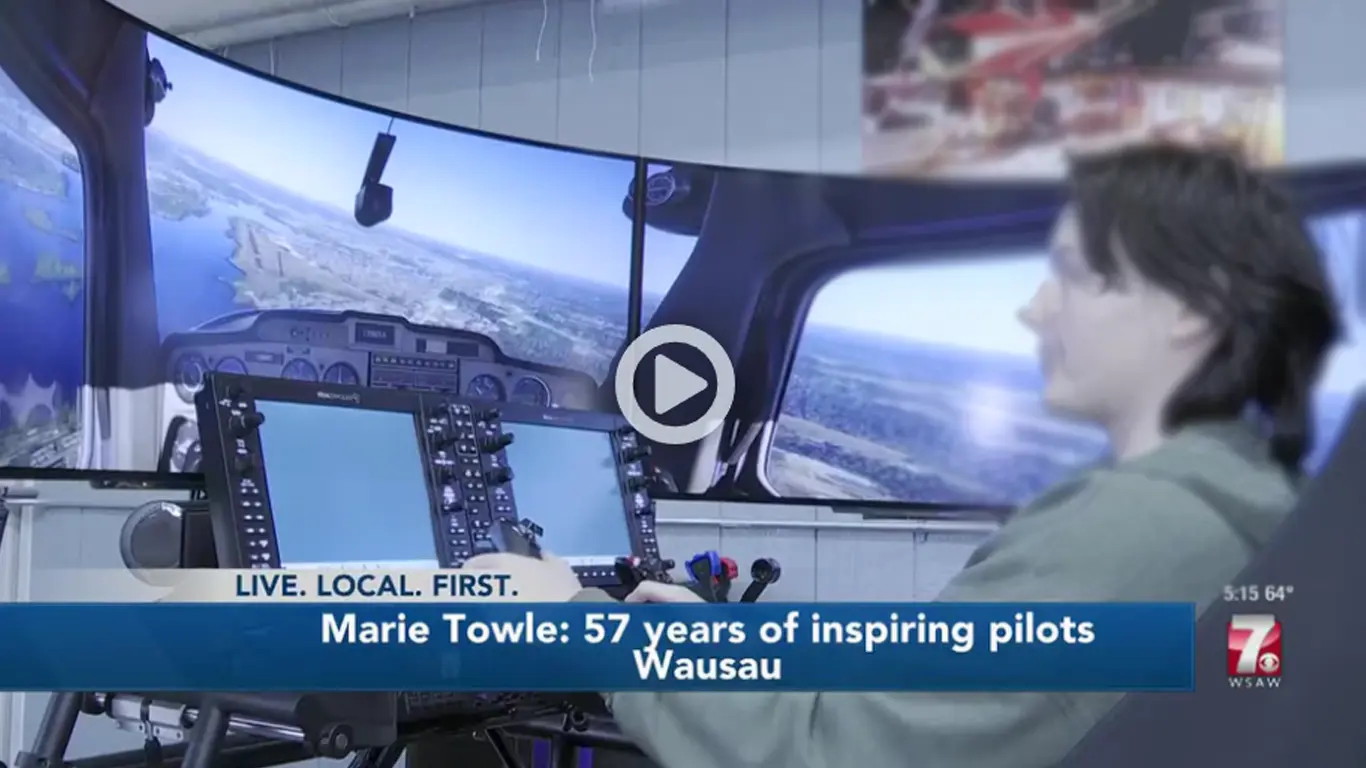
John Chmiel, the airport’s manager and a flight instructor there, met Marie before she passed in 2010. “She was just a very positive person, a smiling personality, but also headstrong, and she knew she had a lot of conviction to do what she thought was right,” Chmiel told WSAW.
That conviction is why there’s still a runway in downtown Wausau. It’s also why there’s still a flight school. “We have one of the busiest flight schools in this part of the state, and we have multiple flight instructors. We also have pilots that we have available for hire,” Chmiel said.
The Learn Build Fly Program Picks Up Where Towle Left Off
Marie Towle’s legacy lives at the airport. The Learn Build Fly program is a free, hands-on aviation track she founded, and it keeps showing up for the next generation of pilots long after the plaques stopped mattering.
Students in the program build airplanes from scratch, hands on the metal from day one. They weld. They wire. They turn wrenches. They learn what a flight envelope is by helping shape one with their own hands. Along the way, they pick up STEM fundamentals and leadership habits that transfer well beyond the cockpit. (We’ve written before about the way STEM education and racing simulators reinforce each other, and the same principle holds here.)
Charlotte Holbrook is 16, the same age Marie was when she flew her first solo. Charlotte isn’t certain aviation is her destination, and the program is designed for exactly that uncertainty.
“I got to explore with welding and maybe I’ll go further with welding, maybe I’ll go further in woodworking, but the cool thing is that I didn’t have to choose one thing and invest a lot in it. I can play with it before I get completely invested in it,” Holbrook said.
The program welcomes all genders, but it’s not blind to who’s missing from the pipeline. According to the Federal Aviation Administration, women still make up a small fraction of certificated pilots in the United States. Chmiel framed the math plainly: “If we can get women involved, technically we could double the number of pilots.” Organizations like the Ninety-Nines, founded by Amelia Earhart in 1929, have been making that same argument for nearly a century.
How a Flight Simulator Lets Teens Log Real Cessna Time Before They Touch the Yoke
Walk into the Learn Build Fly hangar on a Tuesday and you’ll find a teenager flying laps over Wausau without ever leaving the ground.
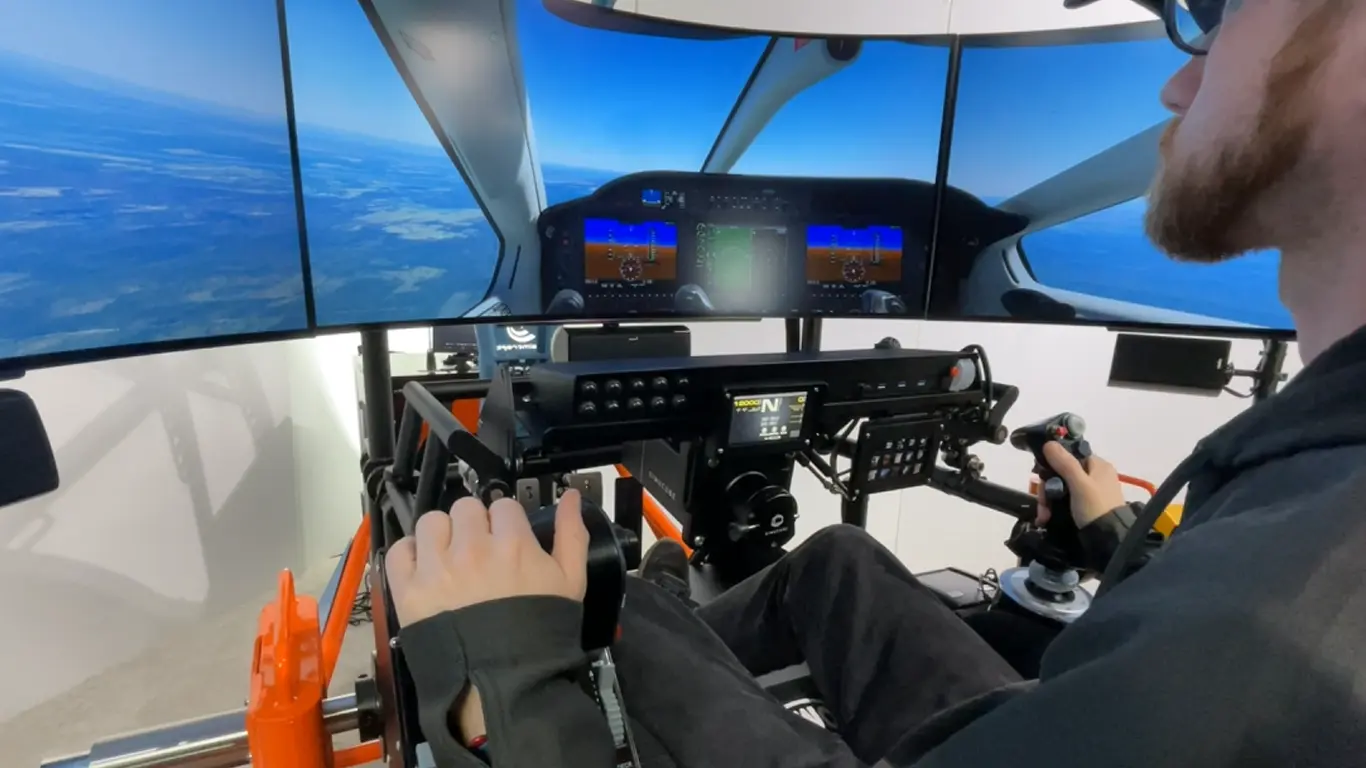
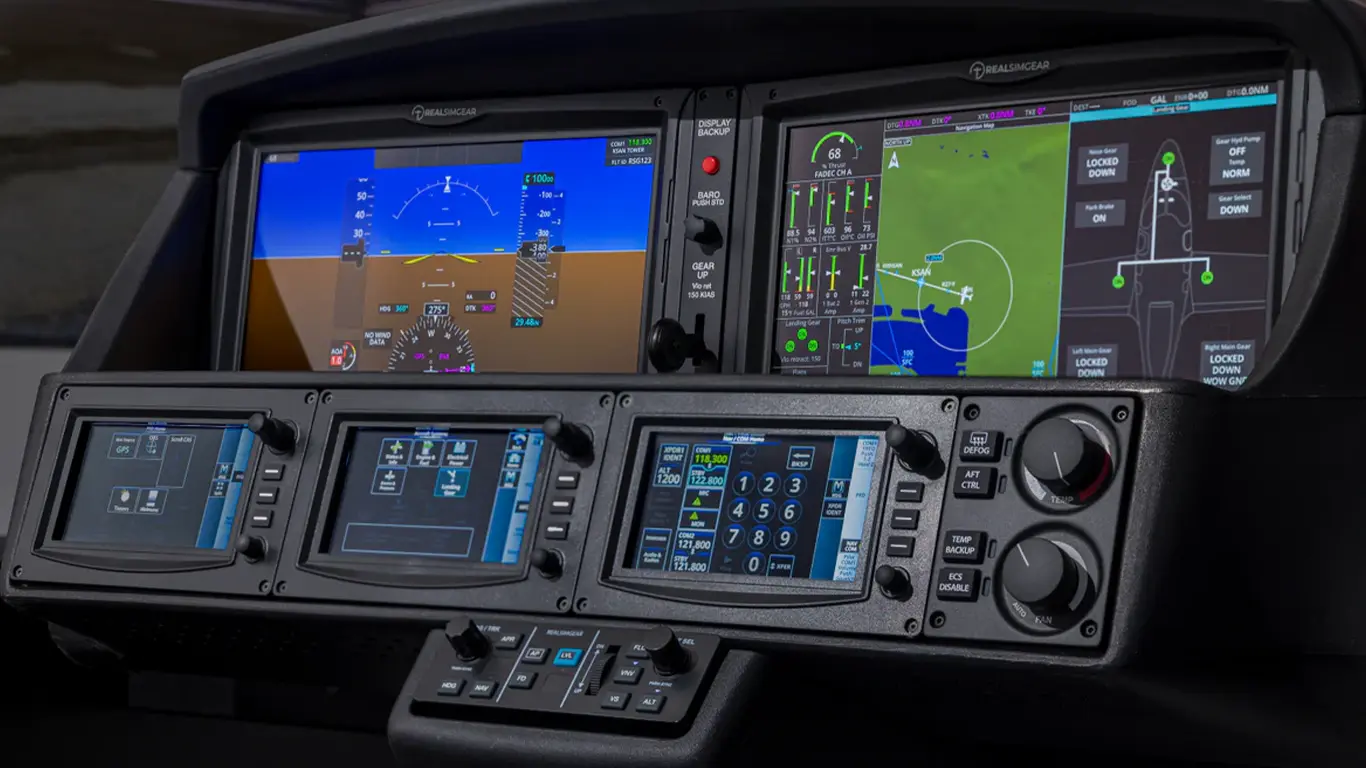
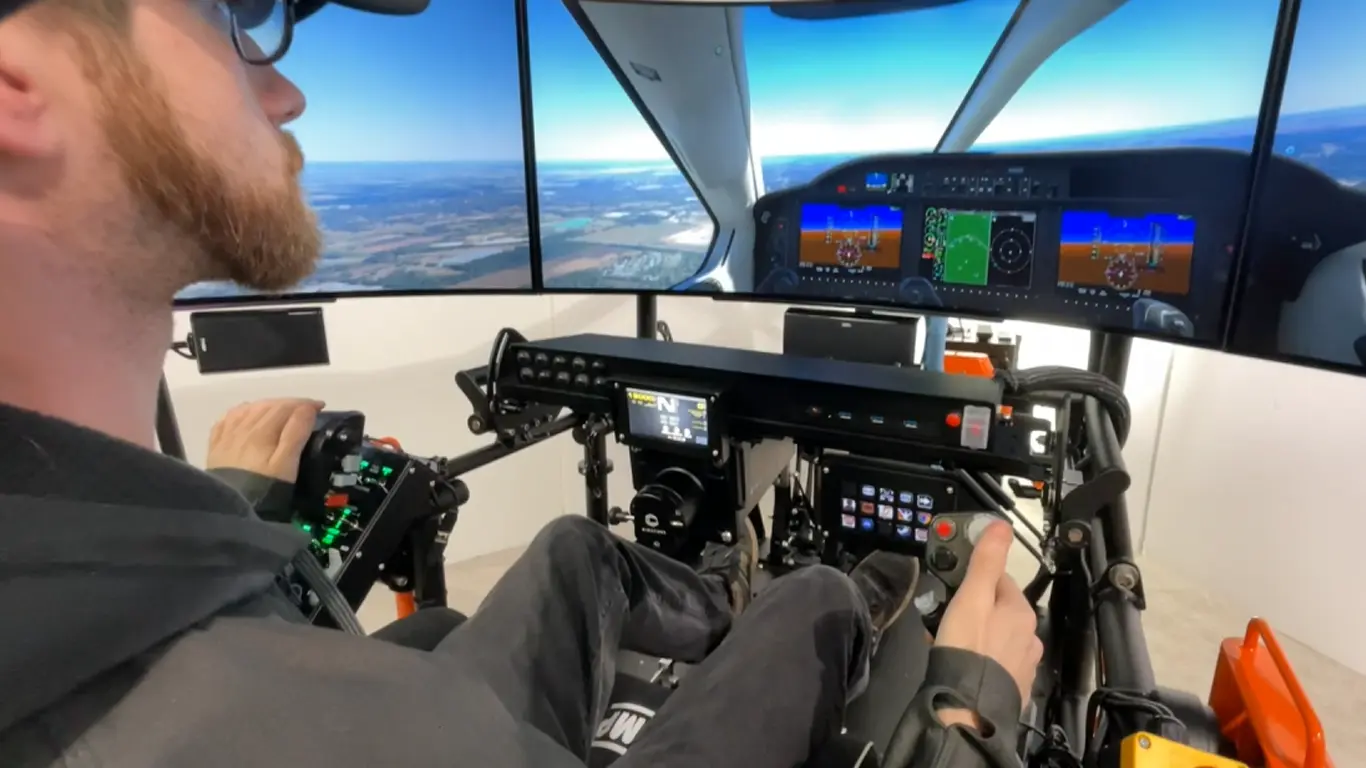
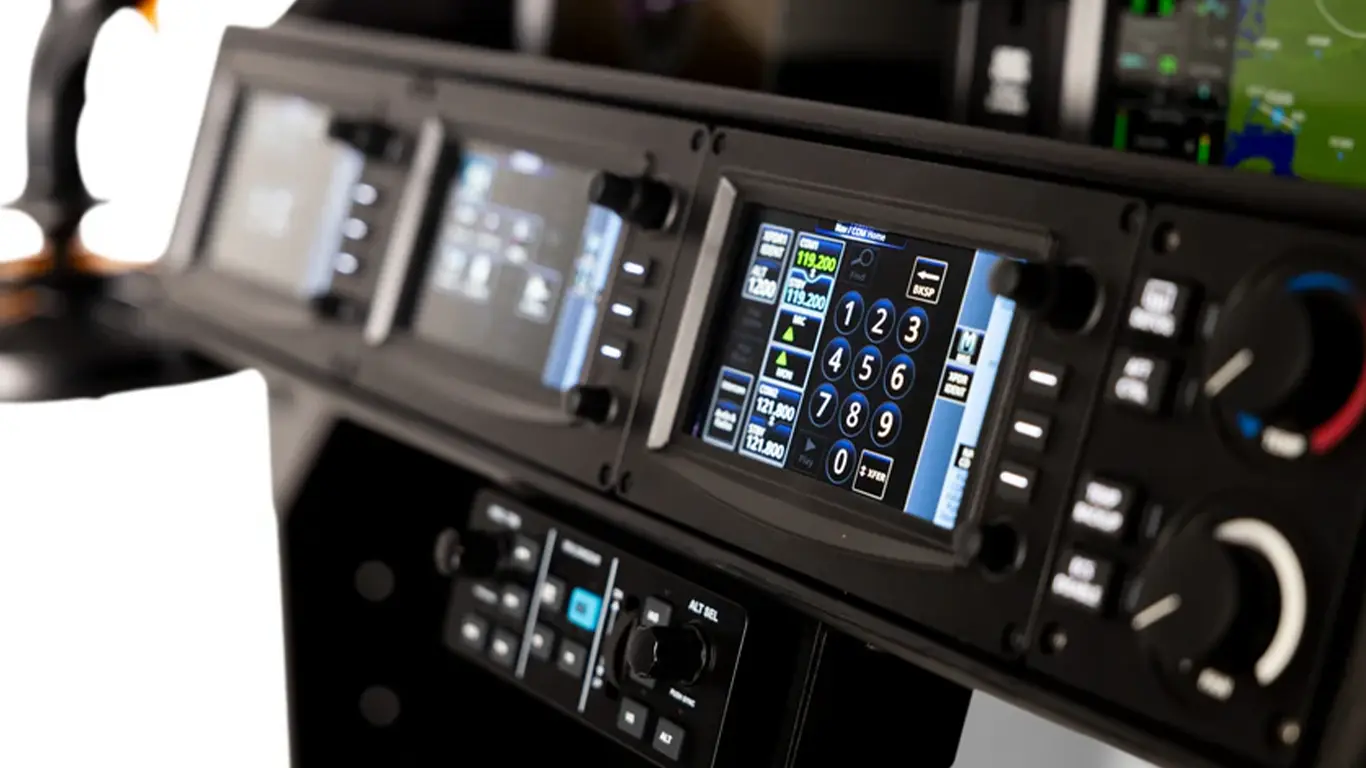
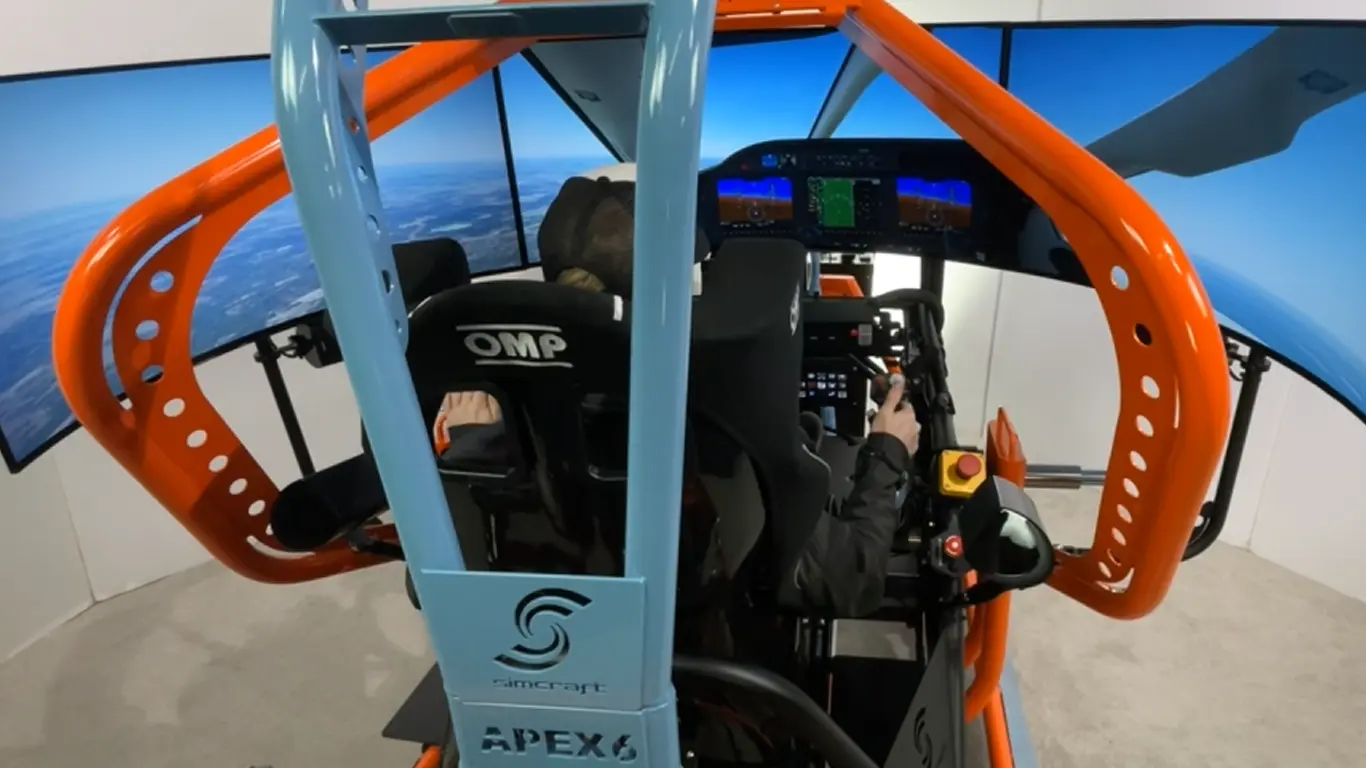
“I am flying a SimCraft in a Cessna 152 over Wausau Downtown Airport,” program member Thea Schaefer told WSAW. The Cessna 152 is one of the most common training aircraft in general aviation. A flight simulator that recreates it lets students rehearse procedures, practice radio calls, and learn the local traffic pattern long before a real instructor signs off on a discovery flight.
A few things happen when a student logs flight simulator time over their actual home airport:
They build visual familiarity with the runway, taxiways, and surrounding landmarks they’ll use on a real first solo.
They develop procedural memory for gear, flaps, throttle, and radio calls until the sequence feels automatic instead of overwhelming.
They face decision-making under load. Crosswinds, traffic conflicts, engine roughness: a flight simulator can present all of it without any real risk.
The cost angle matters too. Renting a Cessna 152 with an instructor can run well over a hundred dollars an hour, before fuel surcharges. A flight simulator session costs the program almost nothing per hour, which is exactly why a free youth program can offer real flight training in the first place. We’ve made the same argument on the racing side: see our breakdown of how simulator training compares to real-world track time for the parallel math.
Why Motion Matters in a Flight Simulator Built for Real Skill Transfer
Here’s where SimCraft’s lane intersects the Wausau story.
A static flight simulator, the kind that sits on a desk with a yoke and pedals, is great for procedures. It’s where most student pilots first learn checklists, instrument scans, and radio etiquette. But it can’t teach the body what flight actually feels like. The seat doesn’t pitch when you flare. The cabin doesn’t yaw when crosswinds catch the rudder. Your inner ear, which does roughly half the work of flying an airplane, has nothing to react to.
Think of it like learning to ride a bike from a textbook. You’d nail the theory. The first time you actually got on one, you’d still fall over, because balance lives in the body, not the brain.
Motion changes that. A platform that moves independently in pitch, roll, and yaw gives the trainee real vestibular feedback, which is the same kind of cue a pilot uses to detect a stall, recognize a coordinated turn, or feel a gust before the instruments catch up. That’s the whole reason full-motion training devices exist in commercial aviation, and it’s why organizations like the Aircraft Owners and Pilots Association have written extensively about motion fidelity in pilot training.
SimCraft’s motion technology was built for racing, where the same physics apply: independent degrees of freedom, real-time feedback, and a chassis that teaches the body to read the vehicle. The crossover into aviation is why a young aviator like Thea can talk about “flying a simcraft” the same way a junior racer talks about logging simulator laps. Same engineering principle, different cockpit.
If you want the deeper version of that argument, our piece on the science of driver development with motion simulators walks through why motion fidelity matters more than visual fidelity for skill transfer. The conclusion holds whether the windshield shows a banked corner or a downwind leg.
A Legacy That Keeps Taking Off
Marie Towle ran a flying service for 30 years. She kept an entire airport from disappearing. Her story didn’t end in 2010. It kept compounding, one teenage pilot at a time.
The Learn Build Fly students working out of Wausau Downtown Airport are the practical answer to a question Marie spent her life asking: what happens when a small community decides aviation belongs to everyone? You get a 16-year-old like Charlotte who can weld and woodwork. You get a young pilot like Thea logging Cessna 152 hours on a flight simulator before her sweet 16. You get a flight school that’s still one of the busiest in the state.
You also get a reminder that the technology behind a great flight simulator isn’t far removed from the technology behind a great racing simulator. Motion is motion. Whether the cockpit is shaped like a Cessna or a stock car, the same logic holds: you learn faster, retain more, and transfer skill better when your body is part of the loop. That’s the foundation under SimCraft’s racing simulators, and it’s part of what makes programs like Learn Build Fly possible.
If you want to support the program or get involved, Learn Build Fly meets every Tuesday at Wausau Downtown Airport. Marie would have wanted you there.
FAQ
What is a flight simulator, and how is it different from a video game?
A flight simulator is a training tool that recreates the controls, instruments, and physics of a real aircraft, often using authentic yokes, rudder pedals, and throttle quadrants. A video game might share visuals with a flight simulator, but it doesn’t carry the same procedural fidelity, instrument accuracy, or motion feedback that lets skill transfer to a real cockpit.
Can flight simulator time count toward real flight training hours?
In some cases, yes. The FAA recognizes specific categories of training devices, including Basic Aviation Training Devices (BATDs) and Advanced Aviation Training Devices (AATDs), that can log a limited number of hours toward certain certificates and ratings. A home flight simulator on its own typically doesn’t qualify, but a properly configured device used under instructor supervision often can. Always check current FAA guidance and your instructor’s training plan
Why does motion matter in a flight simulator?
Pilots fly with more than their eyes. The vestibular system in the inner ear detects pitch, roll, and yaw, and a static simulator can’t engage it. A motion-equipped flight simulator gives the body the same cues it would feel in real flight, which speeds up skill transfer and helps trainees recognize stalls, coordinated turns, and gust loads earlier and more reliably.
Why is a racing simulator company writing about a flight simulator story?
Because the engineering is closer than it looks. SimCraft builds motion platforms that recreate independent yaw, pitch, and roll, the same axes that matter in flight. When a Learn Build Fly student talks about “flying a SimCraft” over Wausau, she’s pointing at the same principle that drives our racing work: motion-based training transfers to real-world performance better than static rigs do, regardless of the vehicle.