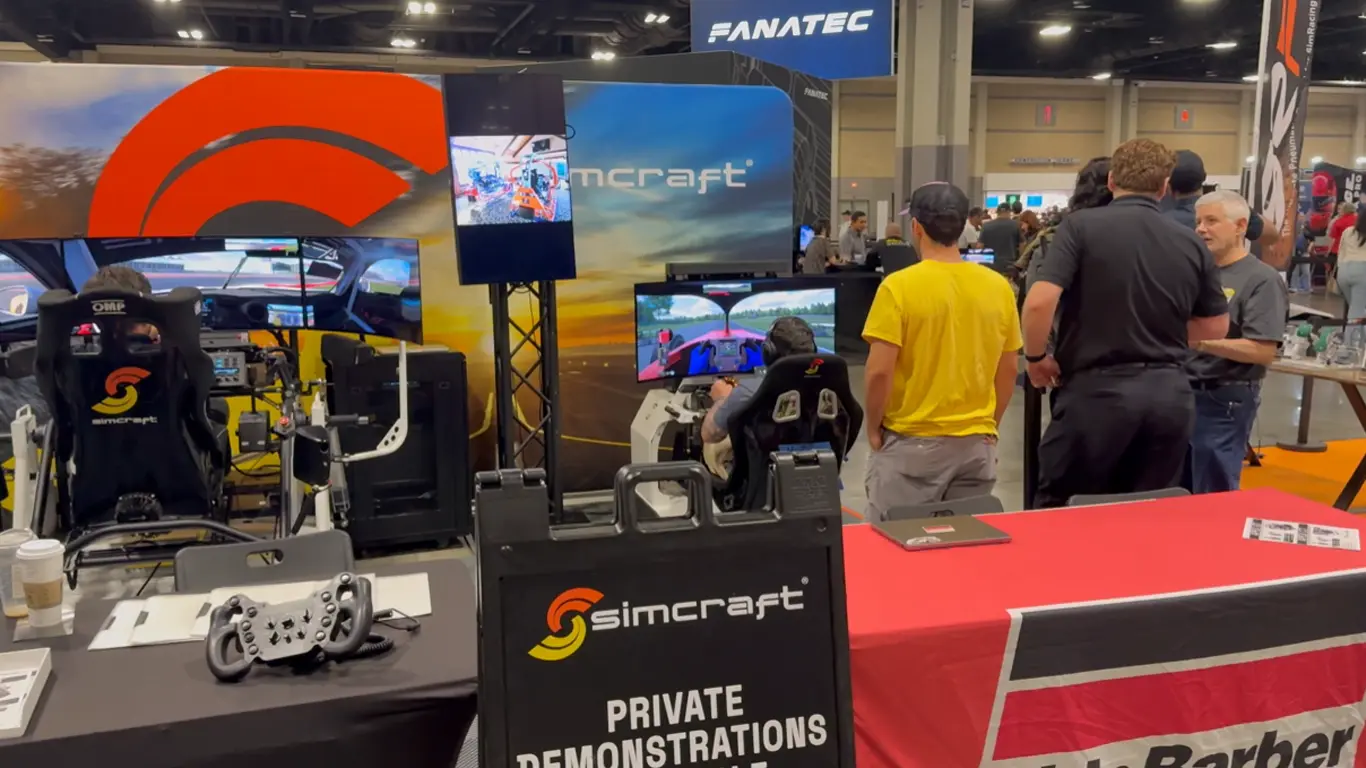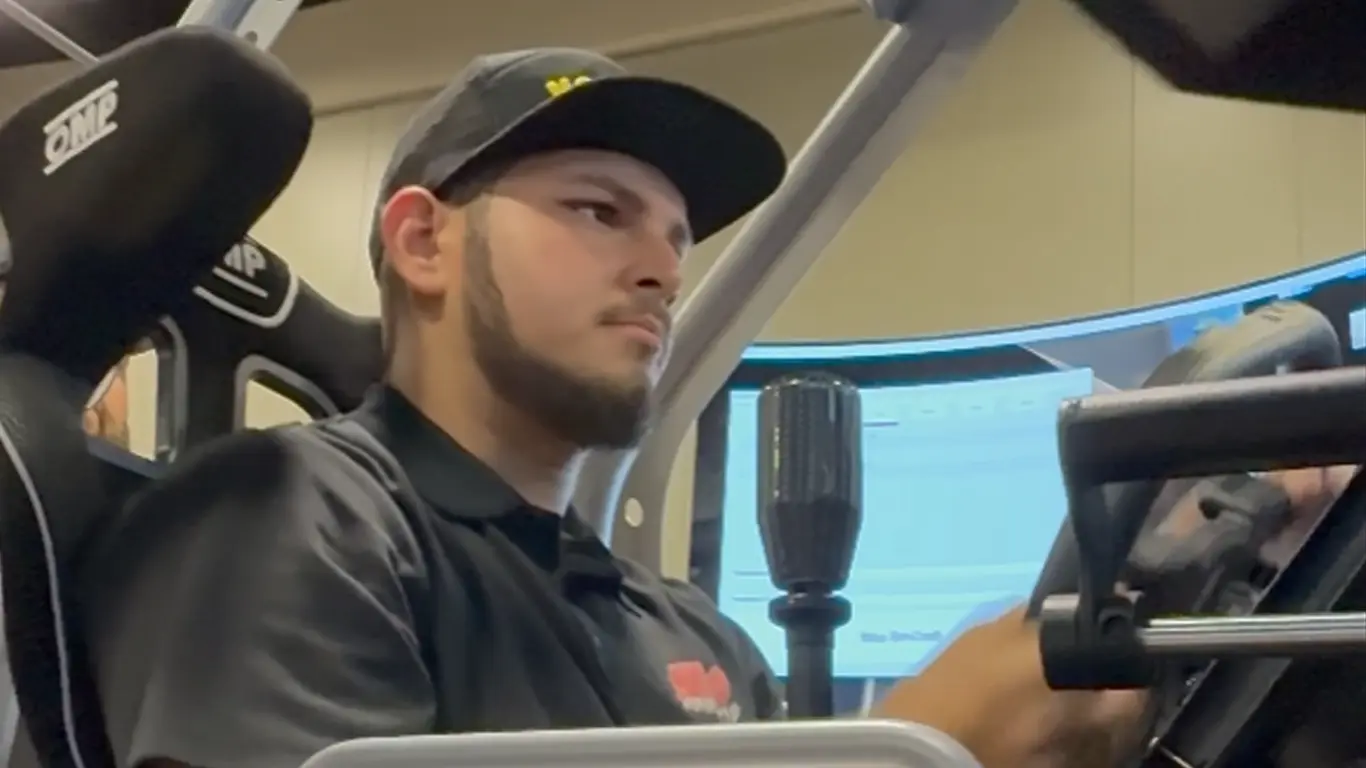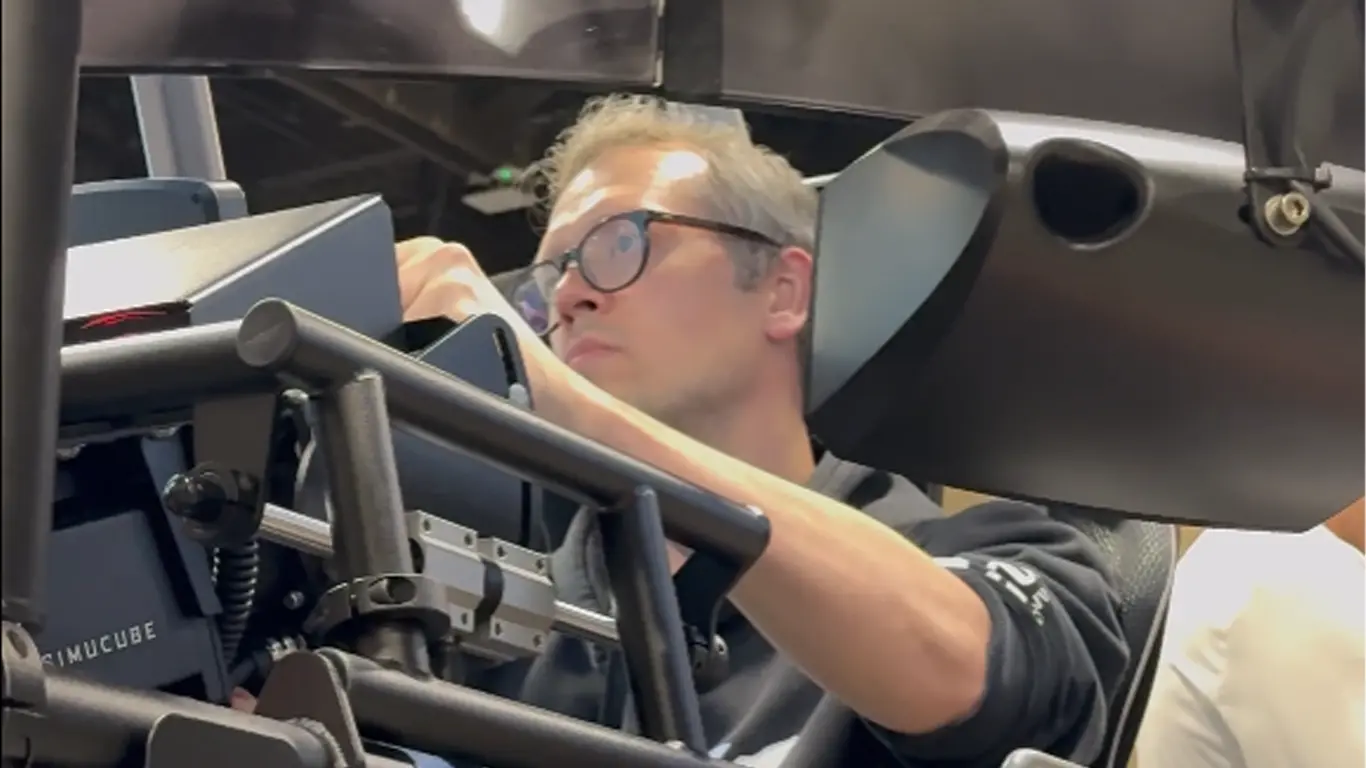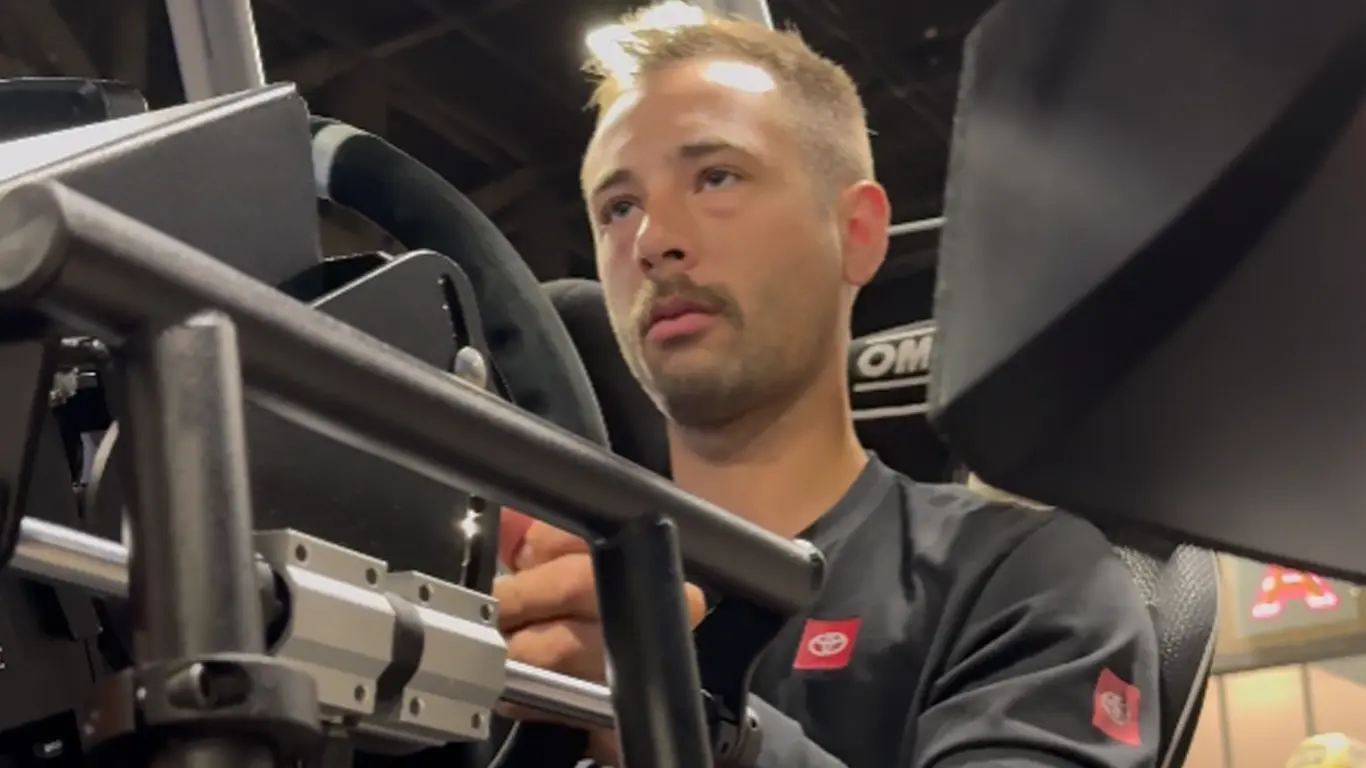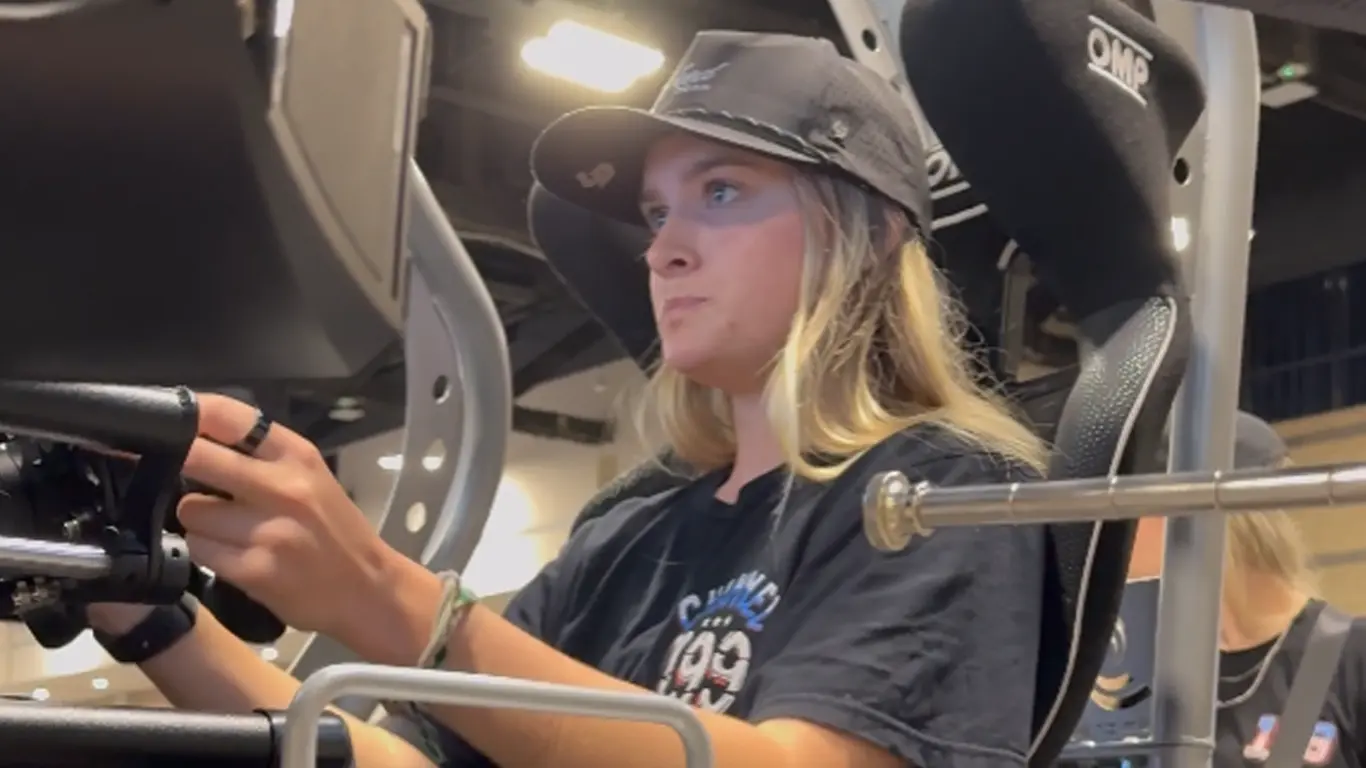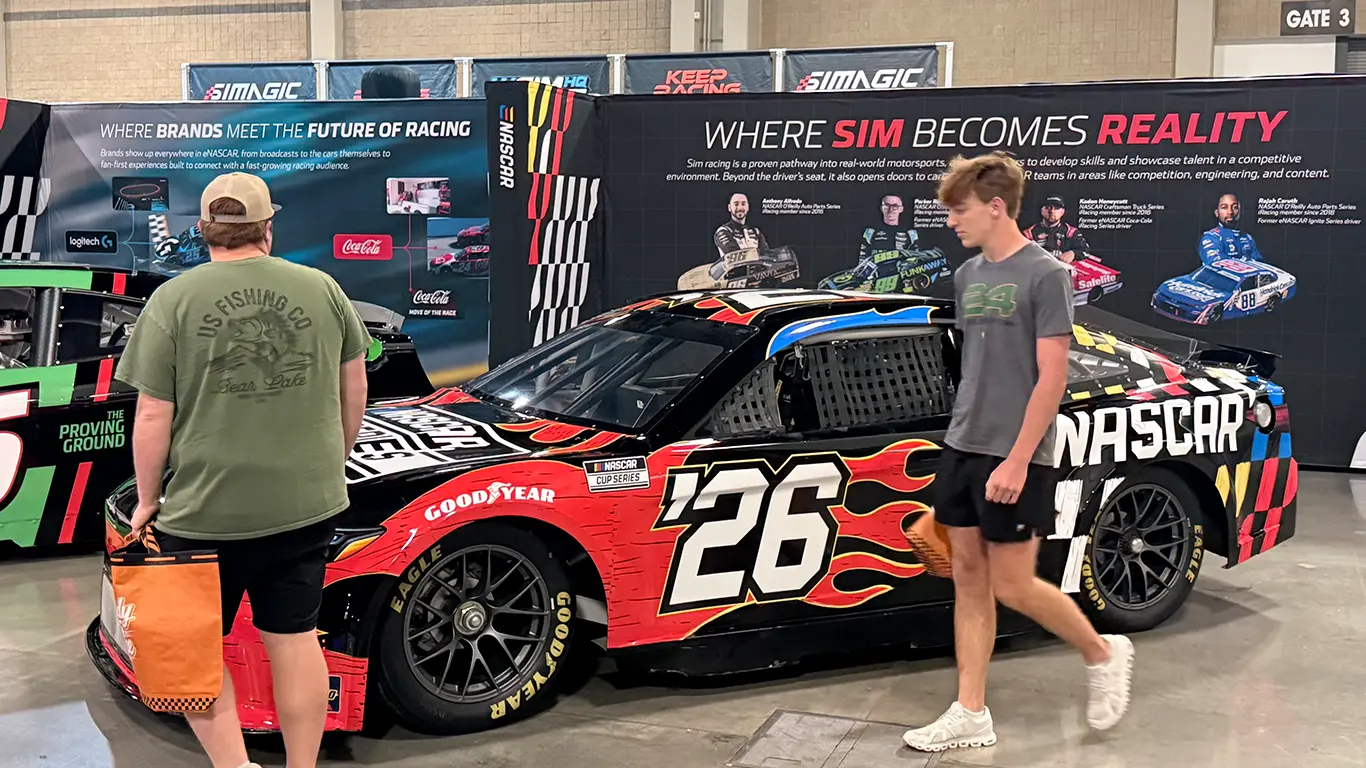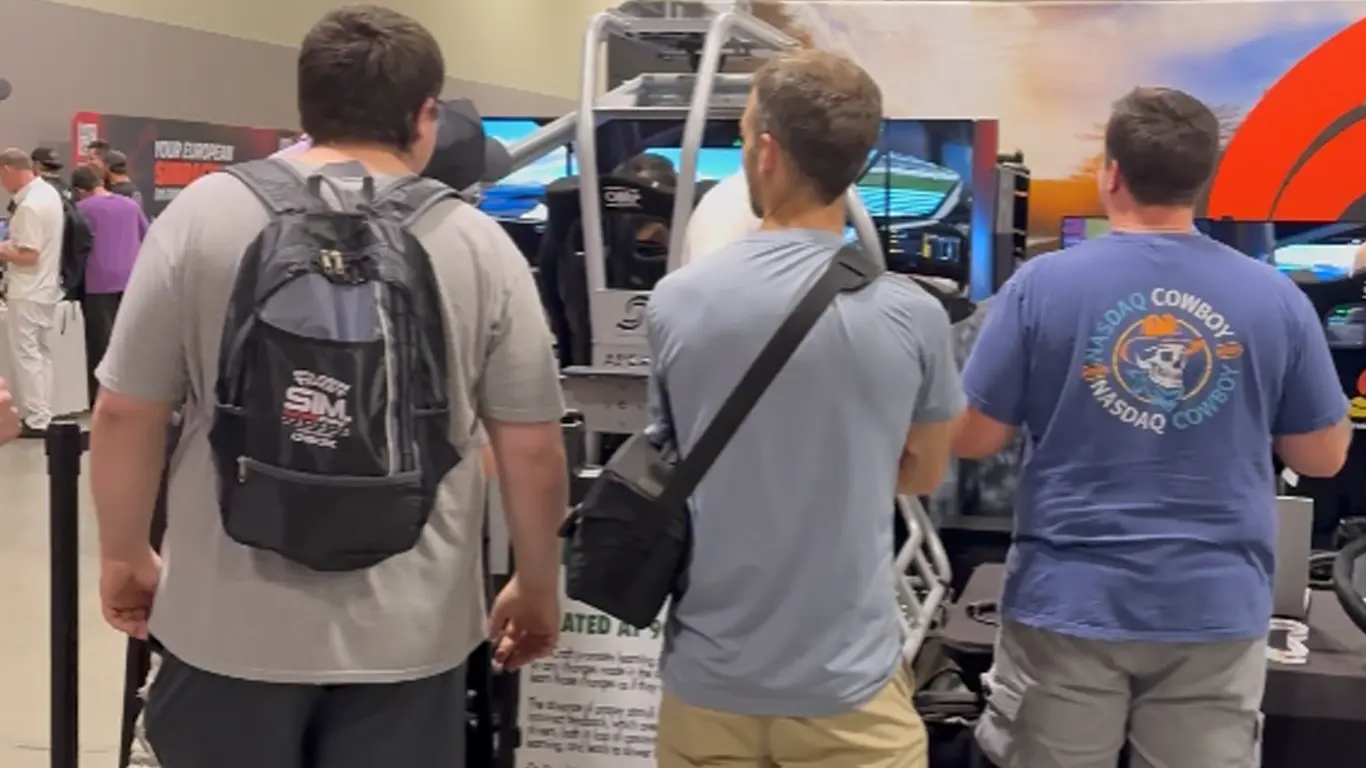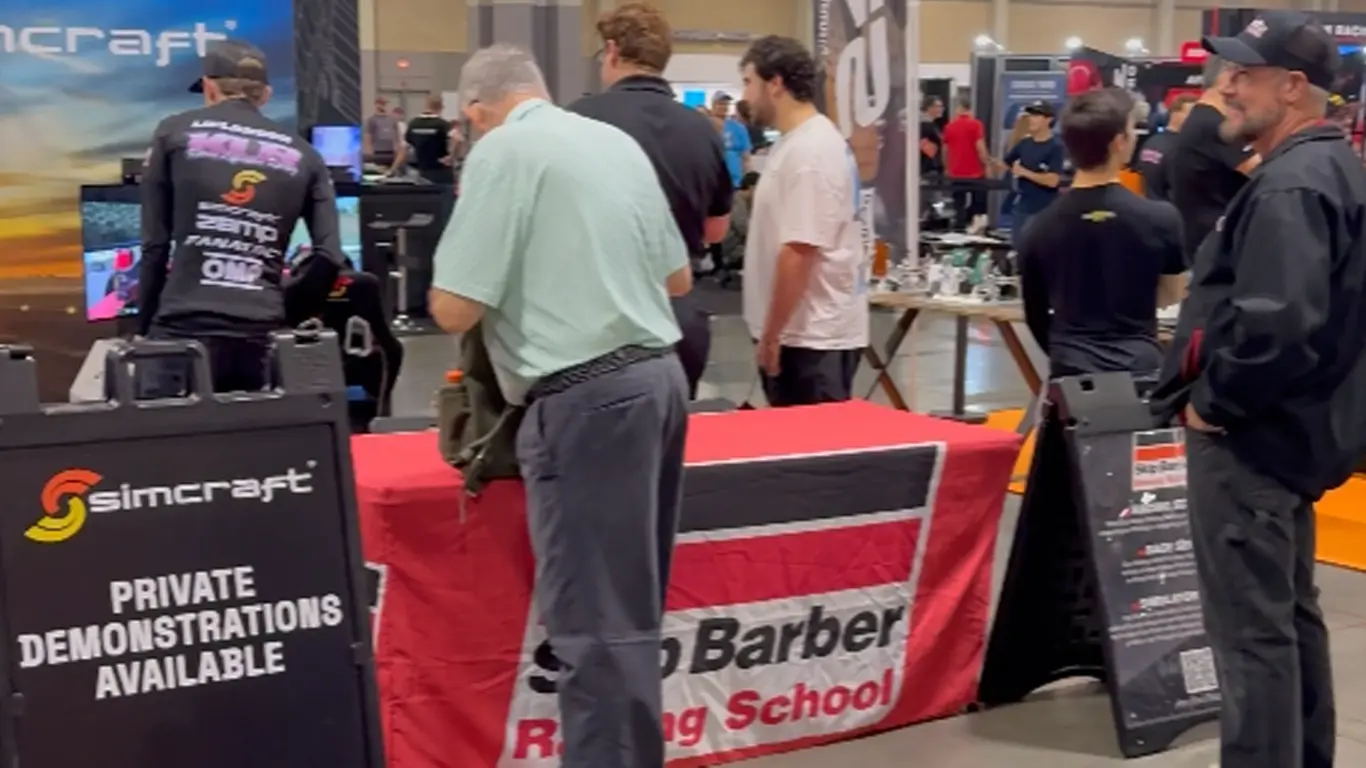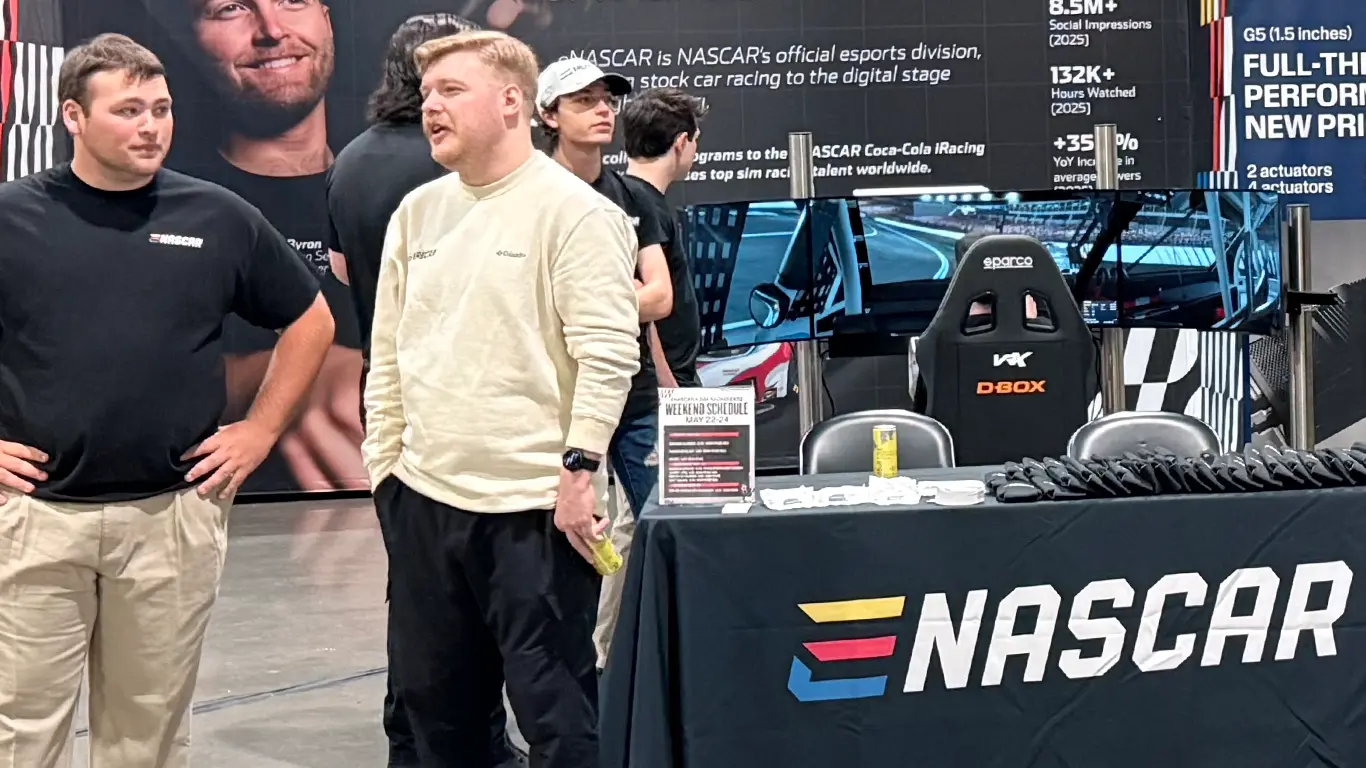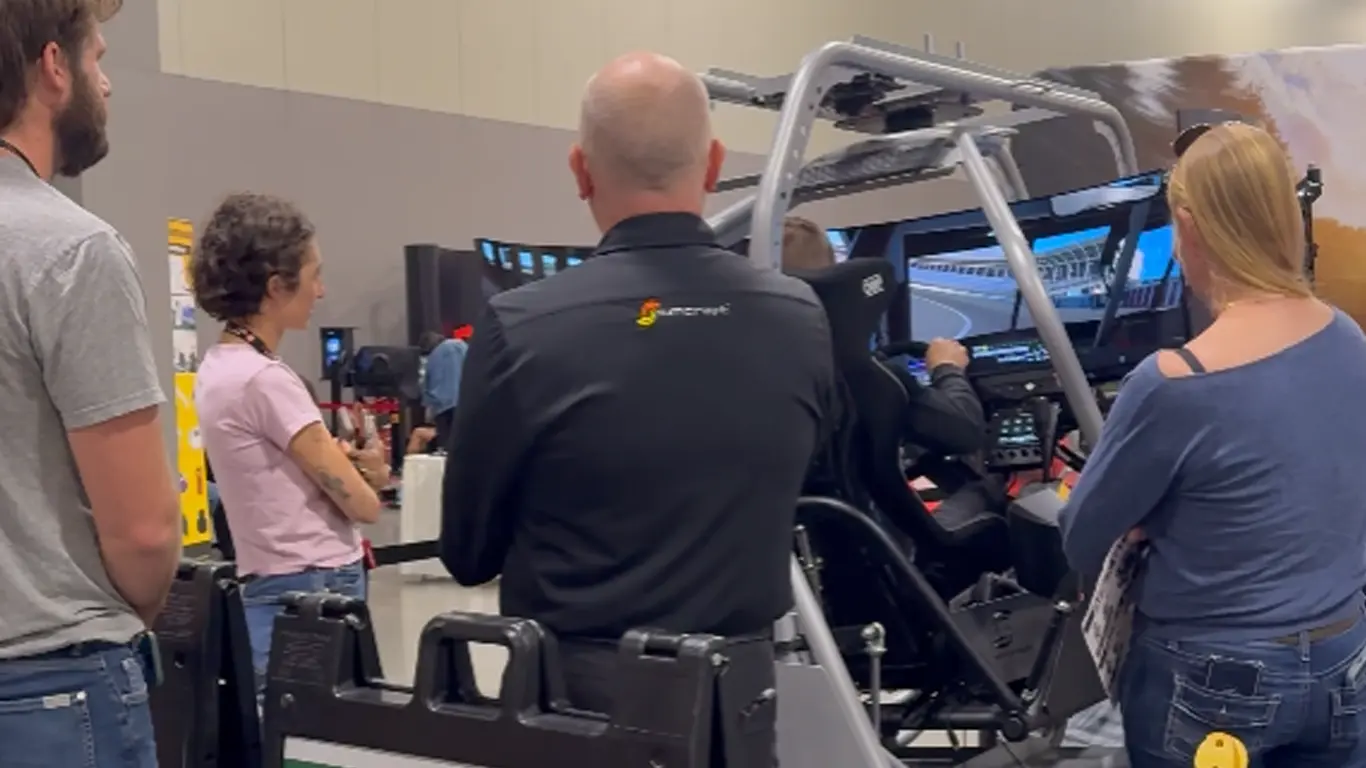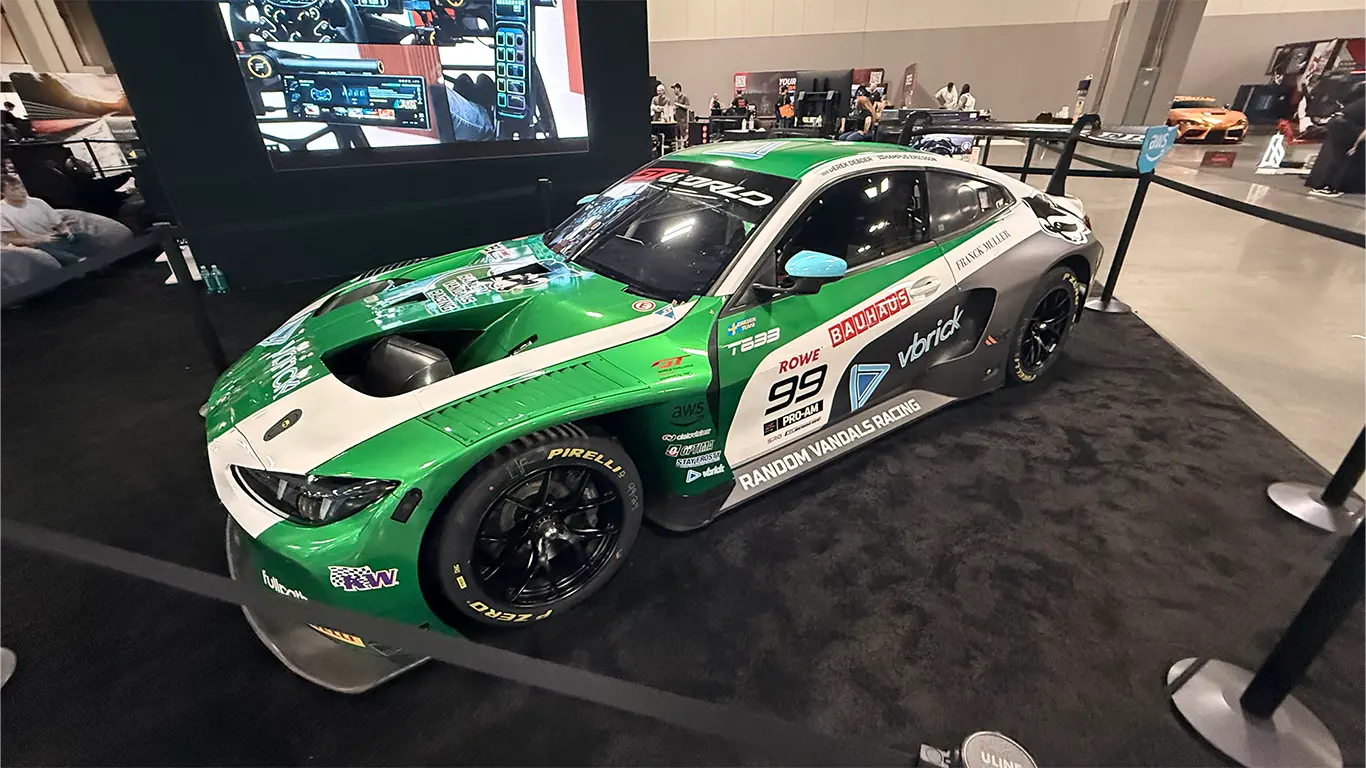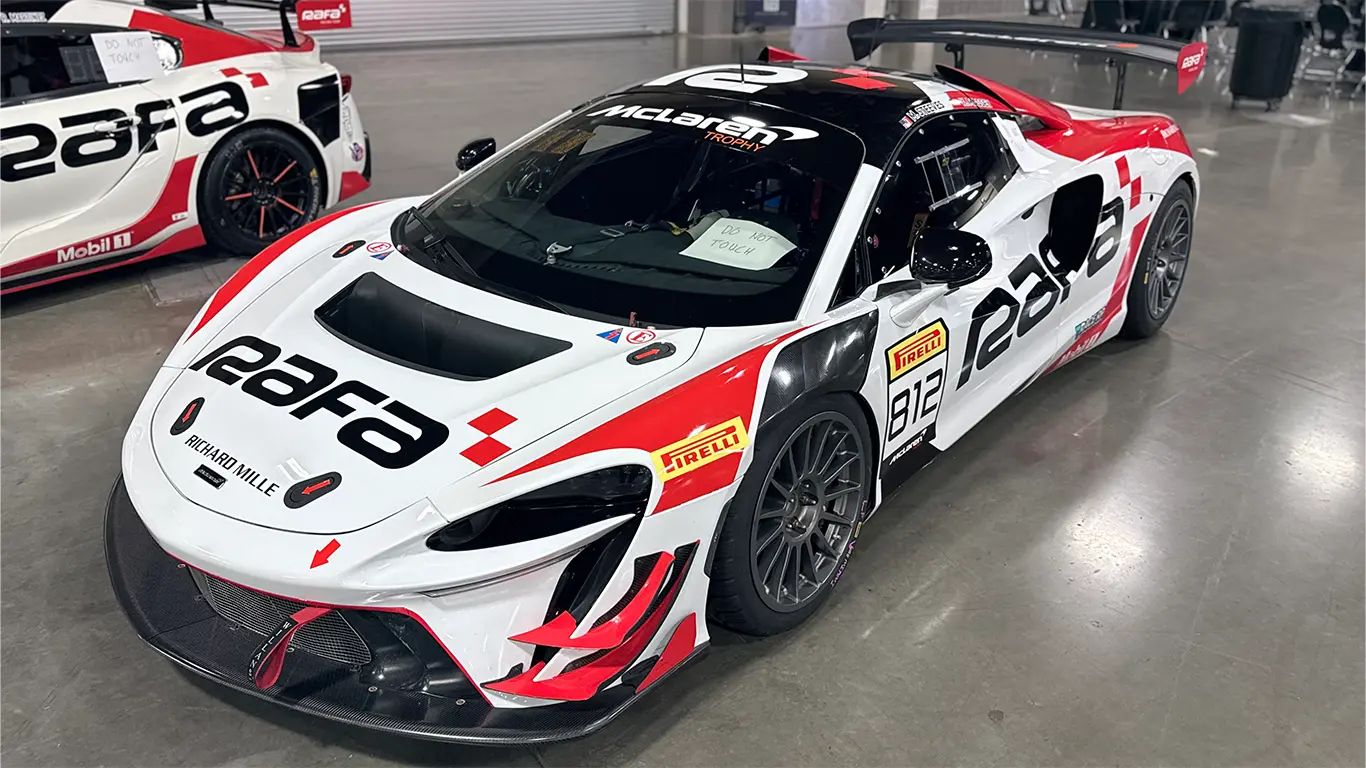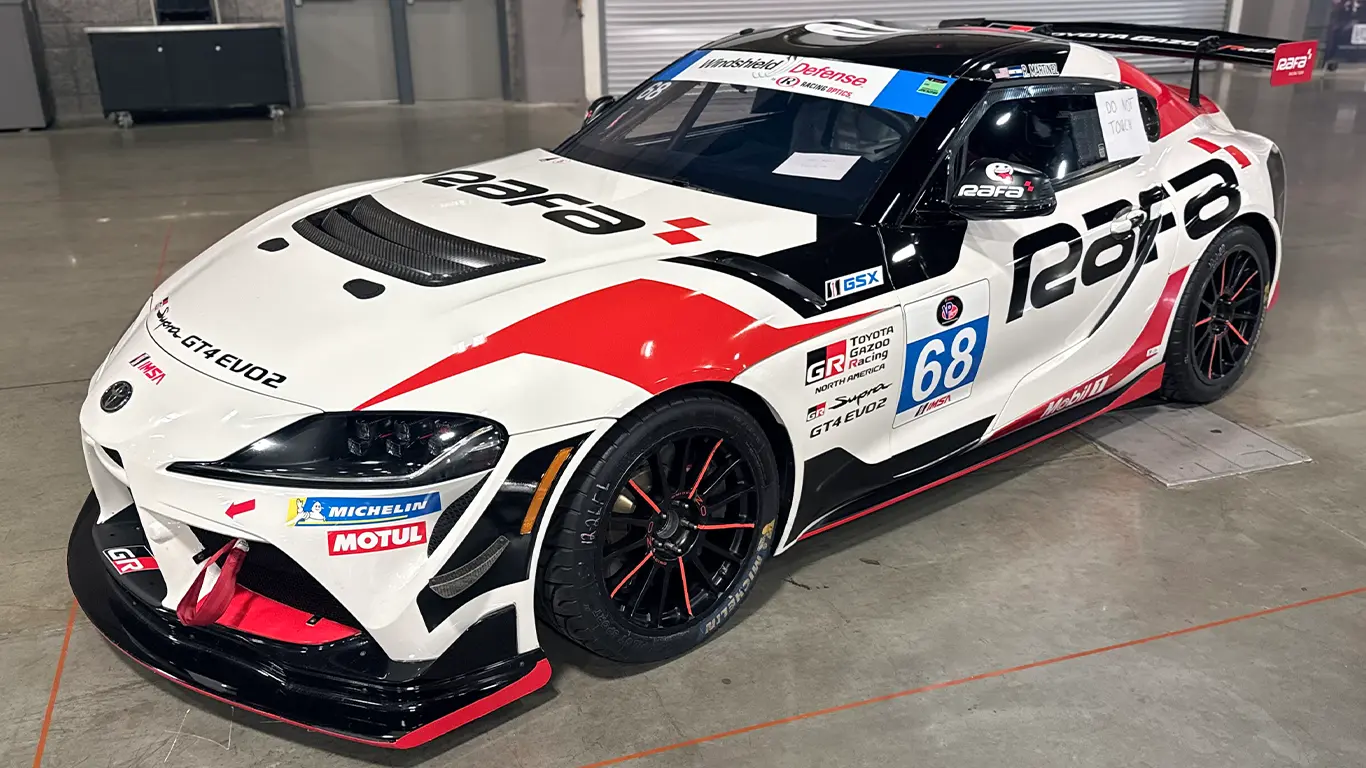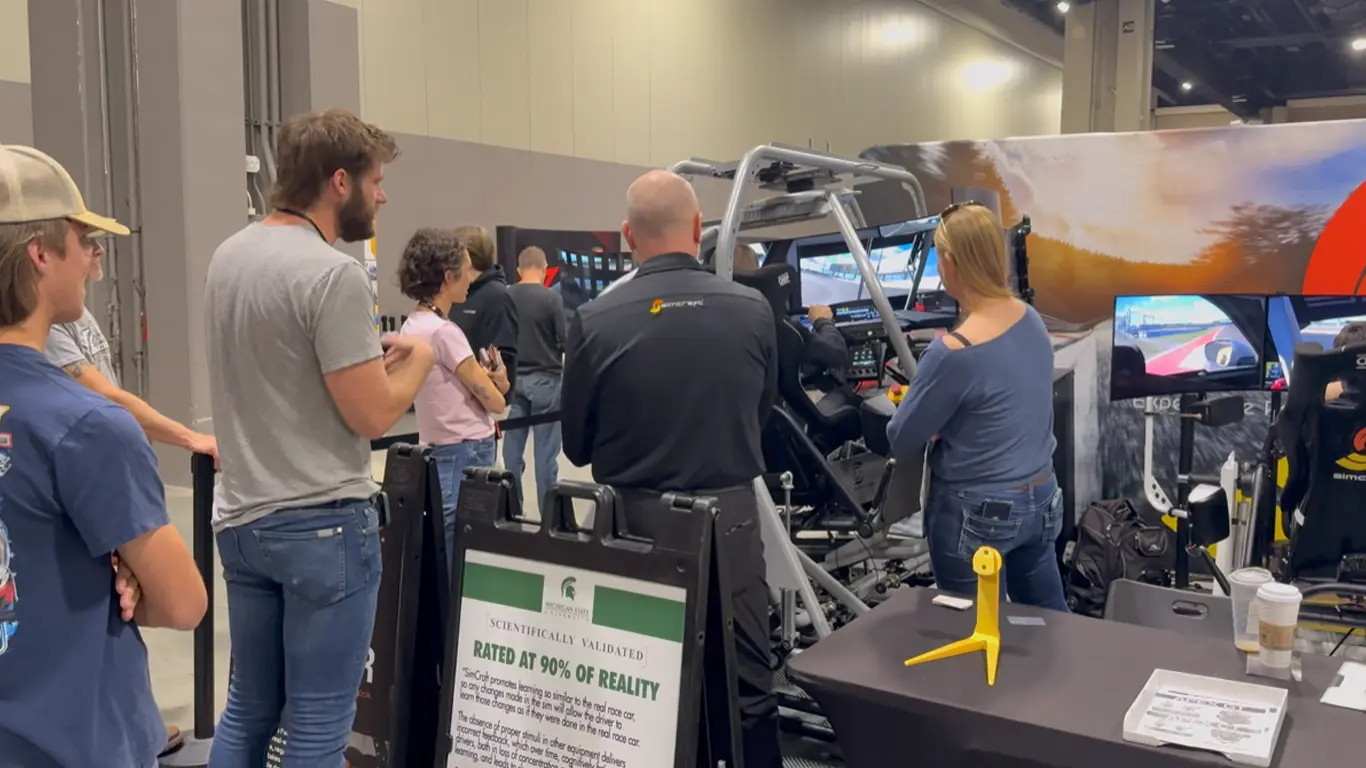
The Charlotte Convention Center filled with the hum of fans, the flash of triple-screen setups, and the steady pulse of demo rotations as visitors moved from booth to booth at SimRacing Expo Charlotte. Most of the floor was built around screens, ranks of monitors, and the leaderboard chase. We brought something built around the racer instead. SimCraft’s booth wasn’t designed for the fastest lap on a Saturday afternoon. It was designed for the driver who has to climb out of the cockpit, into a real race car the following Friday, and turn in a quicker lap on Sunday.
That difference set the tone for the entire week. SimRacing Expo Charlotte pulled together one of the largest concentrations of motion hardware in North America, and our APEX systems stood out as the only platform engineered with rigid body physics, independent degrees of freedom, and a physics-correct™ architecture aimed squarely at real driver development. The bigger story is what that means for anyone who races, or wants to race, on a real circuit, and for a growing list of researchers who use the same hardware for something well beyond motorsport.
A Show Floor Crowded with Pixels, Light on Real Racing
You could walk a long loop at SimRacing Expo Charlotte and never run out of new gear to look at. Direct-drive steering wheels with carbon shifters. Load-cell pedals. Triple curved displays. Wheel bases that delivered enough torque to twist a forearm in a few quick laps. Motion haptics that buzzed under the seat as cars hit curbs. The hardware was impressive, fast-improving, and genuinely fun.
But almost every booth on the floor was speaking to one audience: the sim racer who plays online, chases leaderboard position, and treats the leaderboard as the end goal. That’s a real community with real skill. A fast sim racer can beat you on the virtual track with basic gear because they’ve put in the practice. That’s also not what most SimCraft clients walk in asking for. They want the win in real cars, on real tracks, with real teammates and real consequences.
We have made the focus of our racing simulation equipment around the competitor. A fast simracer can beat you in a sim with the most basic of equipment because they have spent years practicing on that equipment. For us, the competitors who actually race on track are the ones we have been listening to for all these years to refine and develop our product and technology.
Sean Patrick MacDonald, Co-Founder at SimCraft
That gap between sim racing and racing was visible all weekend. It also explains why our three cockpits drew a different kind of foot traffic, and a different kind of conversation.
Three Cockpits in Charlotte: From GRID1 to the APEX 6 GT Full Motion Flagship
We brought three platforms to the Charlotte floor, each engineered around the same physics, sized for different homes and different goals.
The GRID1 is our entry into the lineup, a yaw-motion cockpit with a one-degree-of-freedom envelope tuned around the single cue that tells a driver the rear is stepping out, or that the car is pushing. We hosted a Skip Barber Racing School competition on the GRID1 throughout the weekend, and the driver with the best lap time at the close of the event walked away with a free track day courtesy of Skip Barber. Watching first-time visitors set laps next to seasoned sim racers, all chasing the same number on the timing screen, was the cleanest possible demonstration of why yaw belongs in any cockpit that calls itself a training tool.
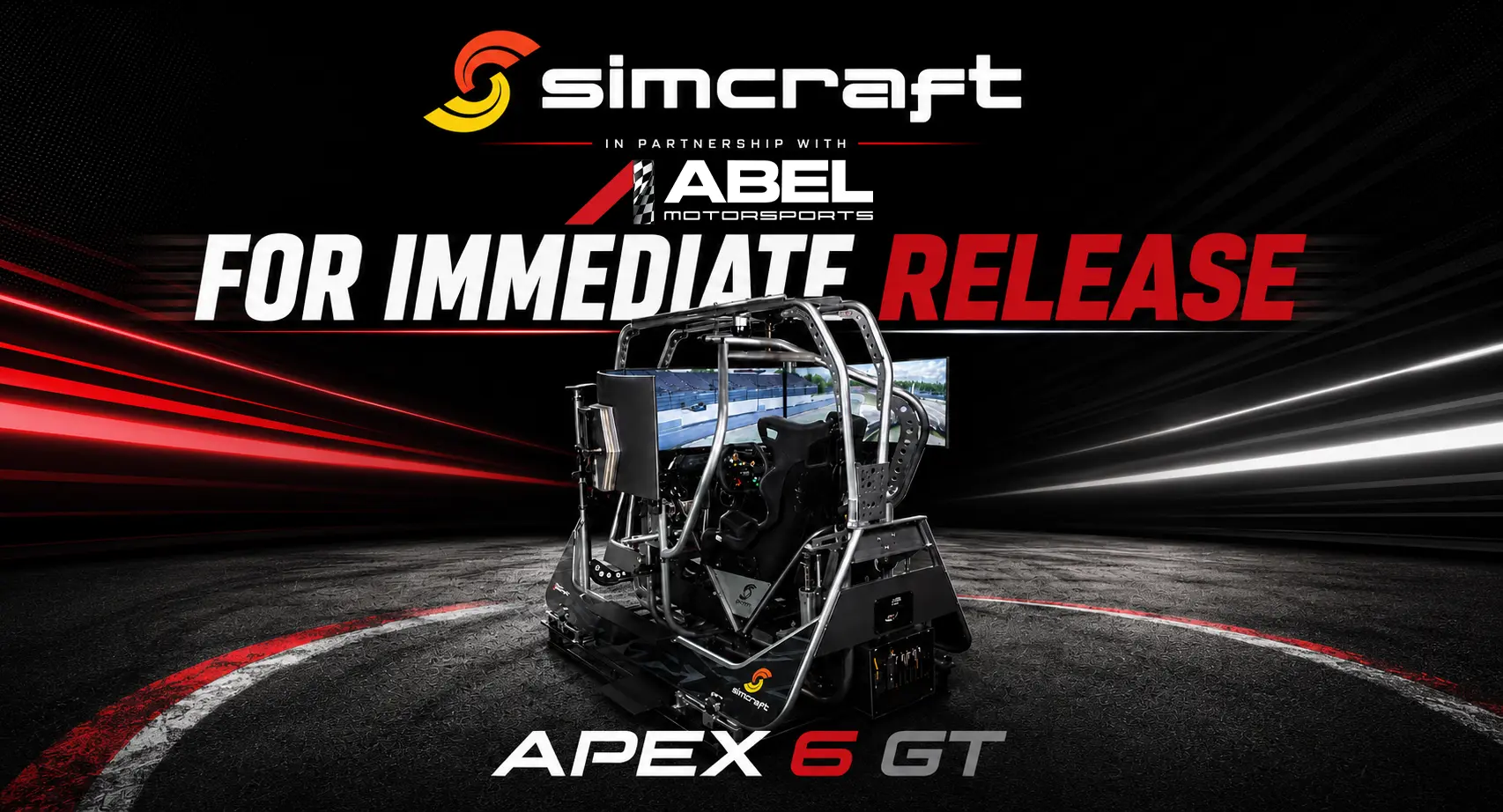
The APEX 4 CT and APEX 6 GT sat alongside the GRID1 as our compact and full-motion options. The APEX CT is a 2dof-4dof platform designed for tighter installations like home shops and race shop annexes. The APEX 6 GT is the six-degrees-of-freedom flagship, the same NASCAR-approved hardware that lives at race team facilities. Both share the same independent-axis architecture and the same physics-correct™ motion design, which is why a driver can move between them without retraining instincts. The APEX 6 GT looks like a small mecha when you walk up to it. The way it moves a driver is the same underlying logic, just expanded into more directions of motion.
Built for Drivers, Not Just Gamers: Why Yaw Defines the Difference
Drivers who came through our area asked the questions that matter on a real track. They wanted to know how the motion system handled corner entry under trail braking, whether yaw built before the rear stepped out, and how the platform loaded up when grip dropped in a long sweeper. Their attention went straight to how the cockpit behaves under braking, throttle, and steering, which is exactly where a training tool earns its keep.
Yaw is the cue that separates a motion cockpit that entertains from one that teaches. Other motion cockpits offer some version of it. Few are tuned to deliver it in a way the driver’s brain can actually use. Yaw is how the brain learns understeer, oversteer, drift, and grip. Take it away, and the practice trains the eyes but not the instincts. Get it wrong, and the practice trains the wrong instincts. Get it right, and a driver climbs out of the cockpit on Sunday morning with the same internal map they’d have after a full day of real laps.
That’s the engineering bar we set for every SimCraft platform, from the GRID1 up through the ELITE editions of the APEX line. The fidelity scales. The principle does not.
Rigid Body Physics: Making the Racing Simulator Move Like a Real Car
Rigid body dynamics sounds academic until you sit in the seat. A rigid body is an object whose internal distances don’t change as it moves. A real race car chassis behaves that way: the distance between the driver’s hands on the wheel and their eyes on the apex stays the same, no matter how hard the car pitches into a braking zone. Cars, planes, and spacecraft all move under the same physics, and they all rotate and translate around a center of mass. These laws have been understood for more than 250 years, since Leonhard Euler first formalized them.
That principle is the foundation of our entire motion architecture. It’s also where most of the rest of the industry parts ways with us. Many competing systems are seat movers, brute-force lifters, or hexapods. They produce sensation. They don’t reproduce vehicle behavior. Hexapods, for example, use six dependent actuators to move the cockpit. Change one direction, and you’ve changed the others by mechanical necessity. That coupling creates latency, calibration headaches, and motion cues that don’t quite line up with what the software is asking for. The driver’s brain notices, even if the conscious mind doesn’t.
We took the opposite path. Each axis on our APEX platform is mechanically and logically independent. Every system is designed so that rotations and translations originate from the cockpit’s true center of mass, the same way a real car does on the track. That’s what we mean by rigid body dynamics in motion simulation, and it’s why drivers who’ve sat in OEM factory systems often walk away from a SimCraft session saying it felt more believable.
Independent Degrees of Freedom vs the Seat Mover Approach
There’s a clean way to test the difference. Sit in a seat mover. Brake hard into a fast corner. The seat tilts forward and the cushion bucks under you. Now sit in an APEX. Brake into the same corner. The whole cockpit pitches forward around the cockpit’s center of mass, the visuals stay anchored to the chassis, the driver’s hands and eyes track the same direction as their body, and their inner ear is told the same story their hands at the wheel are telling.
That alignment is the difference between a motion platform that entertains and a system that teaches. Independent degrees of freedom matter because real cars don’t move on a pre-baked envelope. If the hardware can’t separate those cues, the brain can’t learn from them. The driver ends up training the wrong reflex without realizing it.
That’s also why we don’t run d-box motion or rely on haptics layered under a static seat. Haptics are useful as an accent. They’re not a replacement for the cockpit actually rotating where the car would rotate. Drivers know it within a few laps. So do their coaches.
The realistic motion comes from the architecture, not the trim. ELITE editions add tuned audio and premium finishes, but the engineering underneath is identical to the STANDARD platform driving every championship season SimCraft clients post.
Beyond Racing: The Science SimCraft Technology Powers Outside Motorsport
The crowd that came through our area wasn’t all in race suits. Clinicians, researchers, and parents stopped by too. Some of them already knew what we know. The same architecture that trains a Cup Series driver also moves bodies and brains in ways that matter outside the paddock.
SimCraft is a leap in technology and a leap in evidence-based training. Independent research, conducted across multiple institutions, has looked at our platform as a clinical tool, not a hobby product. The findings keep pointing in the same direction.
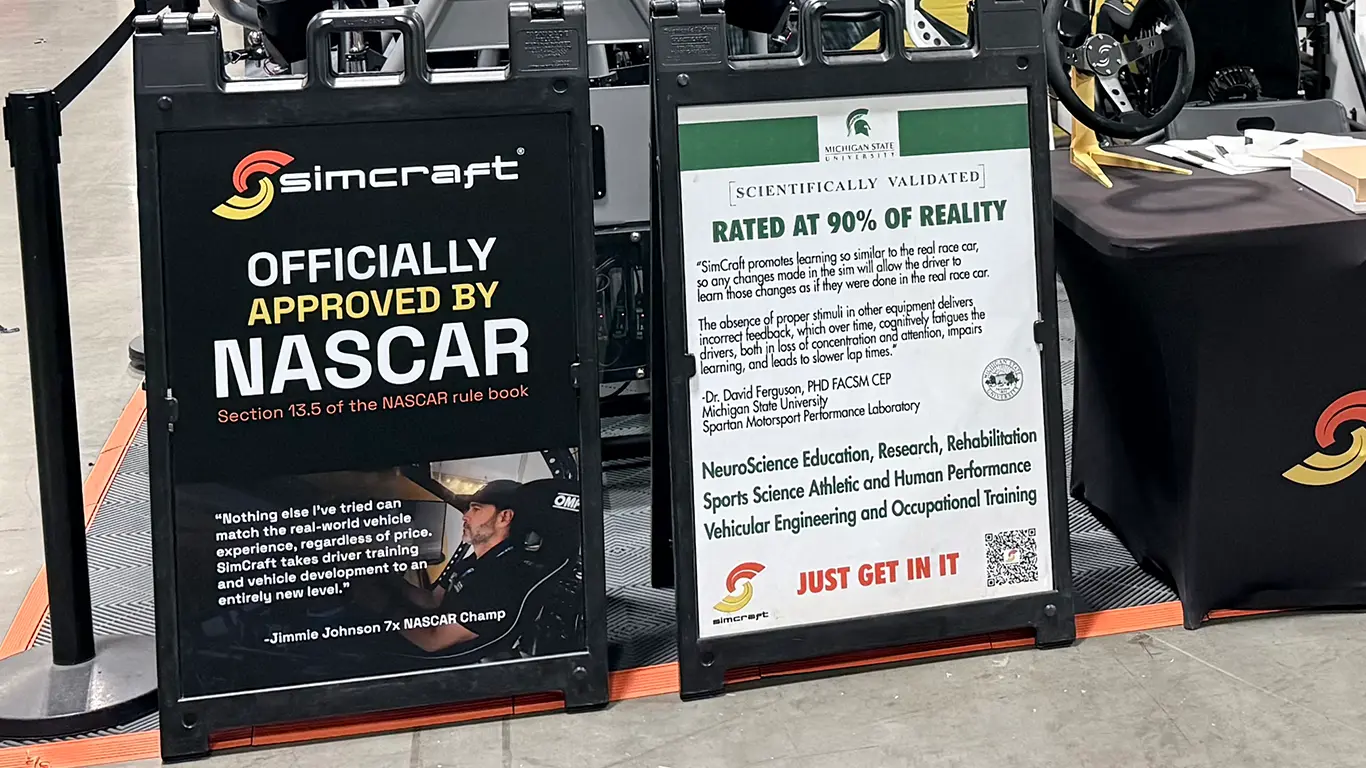
At Michigan State University’s Spartan Motorsport Performance Laboratory, Dr. David Ferguson’s team compared a SimCraft APEX GT to a seat mover and to actual track laps in a Ferrari GT3 at Road America in an independent study. Drivers in the APEX system held concentration and attentional focus through the full session. Drivers in the seat mover lost both. The physiological data, including heart rate and oxygen uptake, lined up with real racing on the SimCraft platform.
At the University of Pittsburgh Medical Center, researchers used an APEX CT in the RACE Study to look at how concussion changes driving performance in adults. Standard clinical tests can miss deficits that surface only when a driver has to integrate motion, vision, and decision-making at the same time. The simulator gave the team a controlled, repeatable environment in which to see those deficits and measure them, with potential to support diagnosis and post-concussion recovery work.
The Austin Hatcher Foundation for Pediatric Cancer ran an IRB-approved pilot study that put childhood cancer survivors and their siblings through a driving simulator intervention on a SimCraft system. Survivors of brain tumors and ALL often face long-term deficits in attention, working memory, and processing speed. The study explored whether the motion, visuals, and cognitive load of race car driving inside a SimCraft cockpit could help develop those executive function skills in a way traditional cognitive remediation software has struggled to match.
Other work has examined SimCraft technology as a possible intervention for neurodegenerative diseases, where the combination of motor planning, sustained attention, and aerobic-style cognitive load may support neuroplasticity in patients with Parkinson’s disease and related conditions. The cockpit becomes a practice ground for the brain to rebuild pathways that disease has disrupted.
That accumulating body of research is also why SimCraft is now a member of the International Council of Motorsport Sciences. Founded in 1988 and headquartered in Indianapolis, the ICMS brings together physicians, researchers, engineers, educators, and sanctioning bodies dedicated to advancing the science, medicine, and human element of motorsport. Membership puts SimCraft in the room with the people shaping the next decade of motorsport safety and recovery: post-concussion return-to-race protocols, fatigue and cognitive load standards, driver fitness research, and rehabilitation pathways for racers coming back from injury. It also means our motion data, our clinical collaborations, and our independent study results contribute to a global conversation about how to keep racers safe in the car, return them to the grid responsibly after injury, and extend healthy careers across the sport.
All of these applications share a single root with everything we showed off at the Expo. The cockpit moves the way a real car moves. The body and brain treat the experience as real. The same instrument that helps a Cup Series driver shave a tenth at Martinsville can also help a survivor regain executive function, support a concussed driver’s return-to-race assessment, and help a patient hold onto motor control. That is what evidence-based looks like, on a show floor, in a clinic, and in the rooms where the future of motorsport safety is being written.
From Booth Demo to NASCAR Simulator Approval
The Charlotte booth was a snapshot of where our APEX 6 GT already sits inside professional motorsport. NASCAR formally approved the platform for in-shop use by Cup Series teams under Section 13.5 (Driver-in-the-Loop) of the rule book, which is why our system is being adopted across multiple NASCAR and Xfinity-level operations.
FAA approval came from the same engineering choices we put on display at the show. The APEX 6 GT cleared the NASCAR simulator standard because its motion specs are independently controlled, physics-driven, and repeatable. Teams don’t have to drive across the country to a shared facility or wait for a slot on a multi-million-dollar OEM rig. They get on-demand seat time in their own shop, with their own data, on their own schedule.
Skip Barber Racing School installed ten SimCraft systems at their headquarters for student development. Riley Technologies adopted SimCraft for engineering work. Alpha Prime Racing brought SimCraft into Xfinity preparation. Team principals, race engineers, and pro drivers came through Charlotte because peers had pointed them to the platform behind those championships.
How Other Full Motion Racing Simulators Fall Short
Most full motion racing simulators on the market lean on brute-force actuators that lift, push, or shake the cockpit. They produce movement. They don’t reproduce vehicle behavior. The motion sometimes arrives a beat late, sometimes in the wrong direction, and sometimes louder than the car would ever feel. That’s a recipe for entertainment, not driver development.
A second category leans on hexapod platforms borrowed from flight simulator history. Six actuators move the cockpit through dependent geometry. Change yaw and you’ve changed roll by a small amount, whether the software asked for it or not. Calibration drifts. Latency creeps in. Drivers compensate, then carry that compensation back to a real car where it doesn’t belong. Mechanical complexity also drives the cost up, which is one con that buyers don’t see until they’re three years in.
Our motion architecture goes the other direction. Independent control on every degree of freedom. Center of mass alignment. Compatible with iRacing, Assetto Corsa, rFactor, and Automobilista. Sub-millisecond command intervals. Position resolution of 0.02 degrees. A car that brakes the same way under the driver’s foot whether they’re at home, in a race shop, in a clinic, or running NASCAR-compliant motion specs at a Cup team’s facility. The numbers matter, but only because they translate into instinct on track and measurable change in the lab.
Why the Best Practice Tool Is the One That Moves Like a Real Car
Charlotte made the case in person. Visitors who’d spent years on seat movers tried the APEX 6 GT and immediately asked what was different. The honest answer is the same answer we’ve given since 2008. A racing simulator built to train real drivers, or to support real research, has to obey the same physics as the car the driver wants to be quicker in. Anything less is practice on the wrong instrument.
Champion drivers across NASCAR, IMSA, IndyCar, and WEC keep showing up to the same conclusion. Jimmie Johnson. Scott Pruett. Ryan Hunter-Reay. Ben Keating. Jordan Taylor. Each has tried plenty of options. Each has chosen SimCraft for the same reason: when the motion is correct, the practice transfers.
“I knew my brake points and turn-in points. I didn’t need to look down at the dash. I knew what the car was doing.”
Ben Keating
SimRacing Expo Charlotte put on a public stage what our drivers, and now our research partners, already know. The right tool for becoming faster in a real race car is the same tool that produces measurable cognitive and physical change in a clinical setting. Physics, working exactly as intended.
If you want to feel it for yourself, our team can arrange a private demo or schedule a white-glove installation at your shop, residence, or facility. Reach out through our contact form.
FAQ: SimCraft at SimRacing Expo Charlotte
Was SimCraft the only true motion option at the show?
SimCraft was the only platform on the floor built around rigid body physics and mechanically independent control on every degree of freedom. Other vendors brought seat movers, hexapods, 4 post brute force lifters, and haptic-only setups, which is great for sim racing entertainment, but a different category from training real drivers.
What hardware did SimCraft show at SimRacing Expo Charlotte?
Three platforms were on the floor: the GRID1 yaw-motion cockpit, which hosted a Skip Barber Racing School competition for a free track day, the compact APEX 4 CT, and the six-degrees-of-freedom APEX 6 GT flagship. All three share the same physics-correct(tm) architecture and were running professional motion profiles tuned by drivers SimCraft works with.
Why do real race drivers prefer SimCraft over a sim racing setup?
Most setups in the broader market are engineered for the leaderboard. A SimCraft platform is engineered to transfer to a real car. The independently controlled motion, the center-of-mass design, and the physics-correct(tm) architecture mean the inputs a driver learns at home behave the same way at the track on race day
Is SimCraft used outside of motorsport?
Yes. Independent research at Michigan State University, the University of Pittsburgh Medical Center, and the Austin Hatcher Foundation for Pediatric Cancer has examined SimCraft platforms for driver workload analysis, post-concussion driving assessment, and executive function development in childhood cancer survivors. Additional work has looked at applications in neurodegenerative disease rehabilitation, including Parkinson’s disease.
What does SimCraft's ICMS membership mean for motorsport safety?
The International Council of Motorsport Sciences is the leading scientific and educational body for the human element of motorsport, with members spanning medicine, research, engineering, and sanctioning bodies worldwide. SimCraft’s membership puts our motion architecture and clinical research alongside the people setting safety and recovery standards for the next decade, including post-concussion return-to-race protocols, driver fitness research, and rehabilitation pathways for racers coming back from injury.