Driver Development Results on Professional Racing Simulators
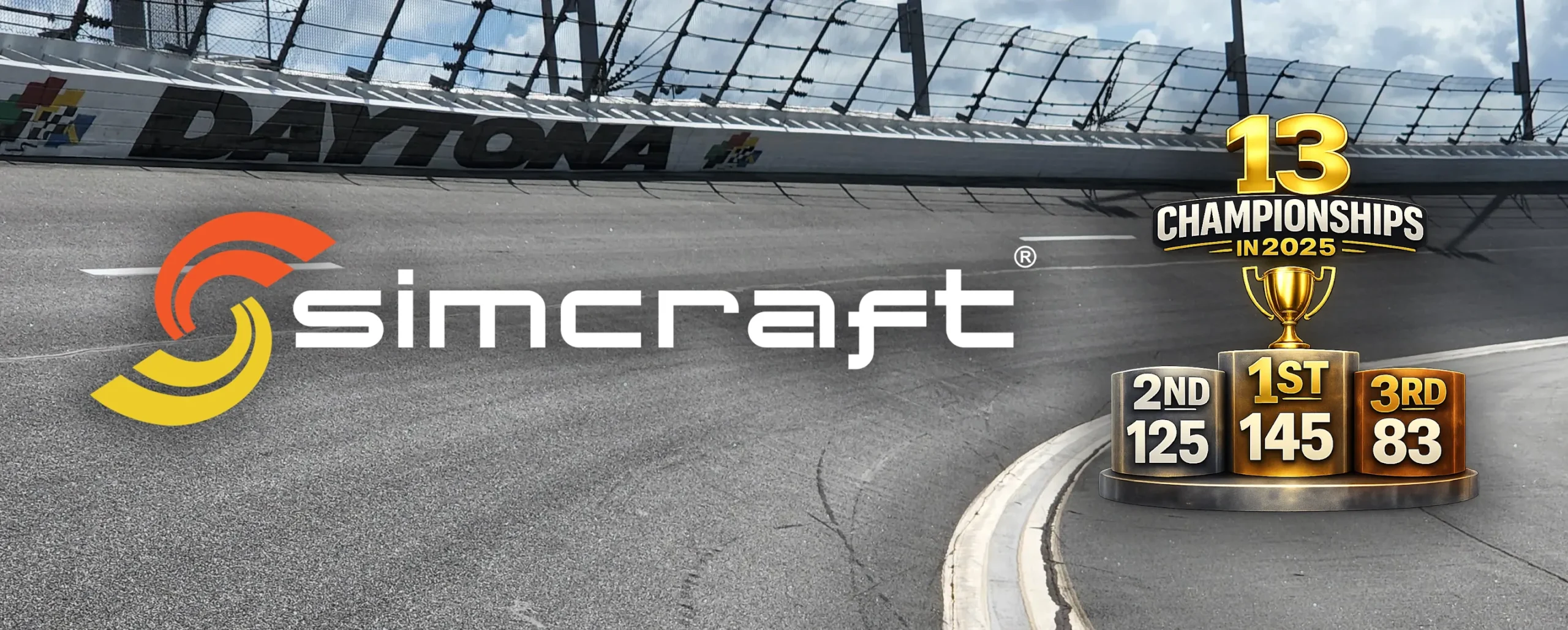
2025 was a season where preparation translated directly into results. Across karting, open wheel, stock car, and sports car racing, drivers training on SimCraft professional racing simulators delivered measurable outcomes. Thirteen championships were secured during the year, supported by 145 wins, 125 second-place finishes, and 83 third-place results. That adds up to 353 podiums across multiple disciplines and levels of competition.
Those results did not come from one standout program or a single racer having an exceptional year. They came from repeatable performance across entire fields. Teams using SimCraft professional racing simulators showed up prepared, executed cleanly, and stayed competitive even on difficult weekends. When outright wins were not possible, points were still recovered. That consistency is what ultimately decided championships.
This is where driver development matters most. The goal was not simply peak pace, but dependable execution. Drivers arrived closer to the limit on Friday, adapted faster as grip evolved, and avoided compounding mistakes when conditions changed. Over a long season, those habits separated title contenders from everyone else.
Preparation Before Race Weekends with Full Motion SimCraft Simulators
What showed up on track in 2025 was built well before race weekends began. Training focused on reducing unknowns and sharpening decision-making under pressure. With full motion feedback, drivers could rehearse braking zones, corner entry behavior, and recovery scenarios in a way traditional racing simulators cannot replicate.
Teams relied on SimCraft motion simulators and a properly tuned motion platform that feels real to work through track learning, race craft, and long-run consistency. New cars, tire compounds, and evolving conditions were introduced in a controlled environment. That preparation shortened the learning curve once real sessions began.
These sessions were not about novelty. The simulator was treated as a serious tool within the weekly workflow. Drivers used it for structured racing instruction, not casual laps. Coaches focused on repeatability, situational awareness, and execution over full race distances. The result was fewer surprises when it mattered most.
For many programs, this approach turned the simulator into a dependable extension of real-world driving. Training time became more efficient, and race weekends started with clearer plans and fewer compromises.
Why Professional Racing Teams Rely on Motion Simulators as a Development Tool
Championships are rarely won by dominating every race. They are earned by stacking results and staying in contention all season. The 353 podiums in 2025 tell that story clearly. Even when weekends were imperfect, drivers trained on professional racing simulators stayed on the box and kept pressure on their competitors.
Teams competing at the highest levels increasingly view motion simulators as core systems, not optional extras. When integrated correctly, a motion simulator reinforces habits that transfer directly to the track. It supports preparation without replacing seat time, and it allows programs to arrive better informed and better rehearsed.
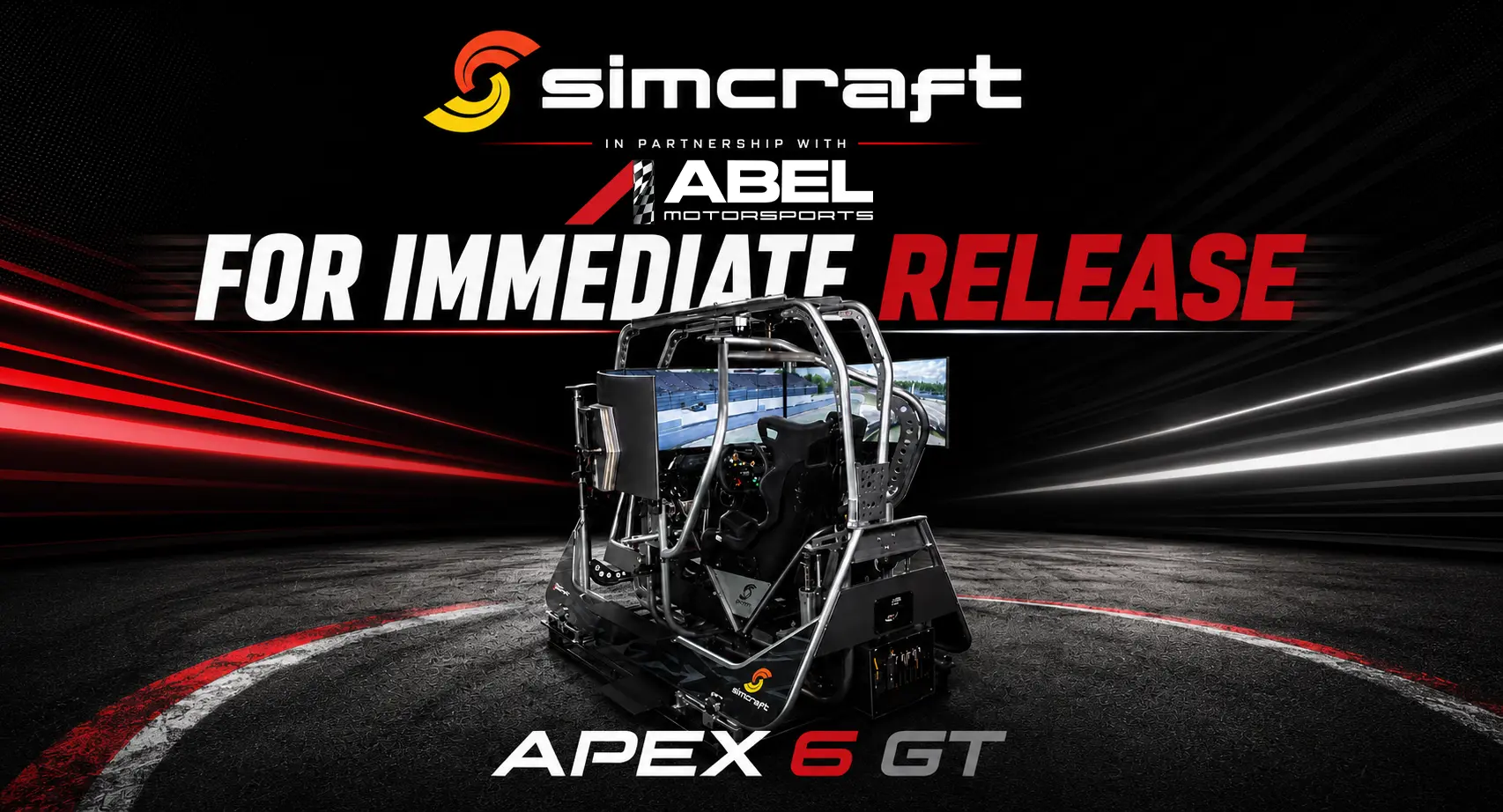
At SimCraft, the focus remains on building performance simulators that support real driver growth. Platforms like the APEX lineup are designed to be turnkey solutions that fit into professional workflows while still allowing teams to tailor training to their specific needs. For many organizations, this has become our best motion simulator option for year-round development.
2025 reinforced a simple truth
Strong preparation, supported by the right simulator strategy, produces results. The work does not stop with championships. It starts again immediately, using what was learned to prepare for the next green flag with SimCraft.