Advancing STEM Education with Racing Simulators at Hernando High School
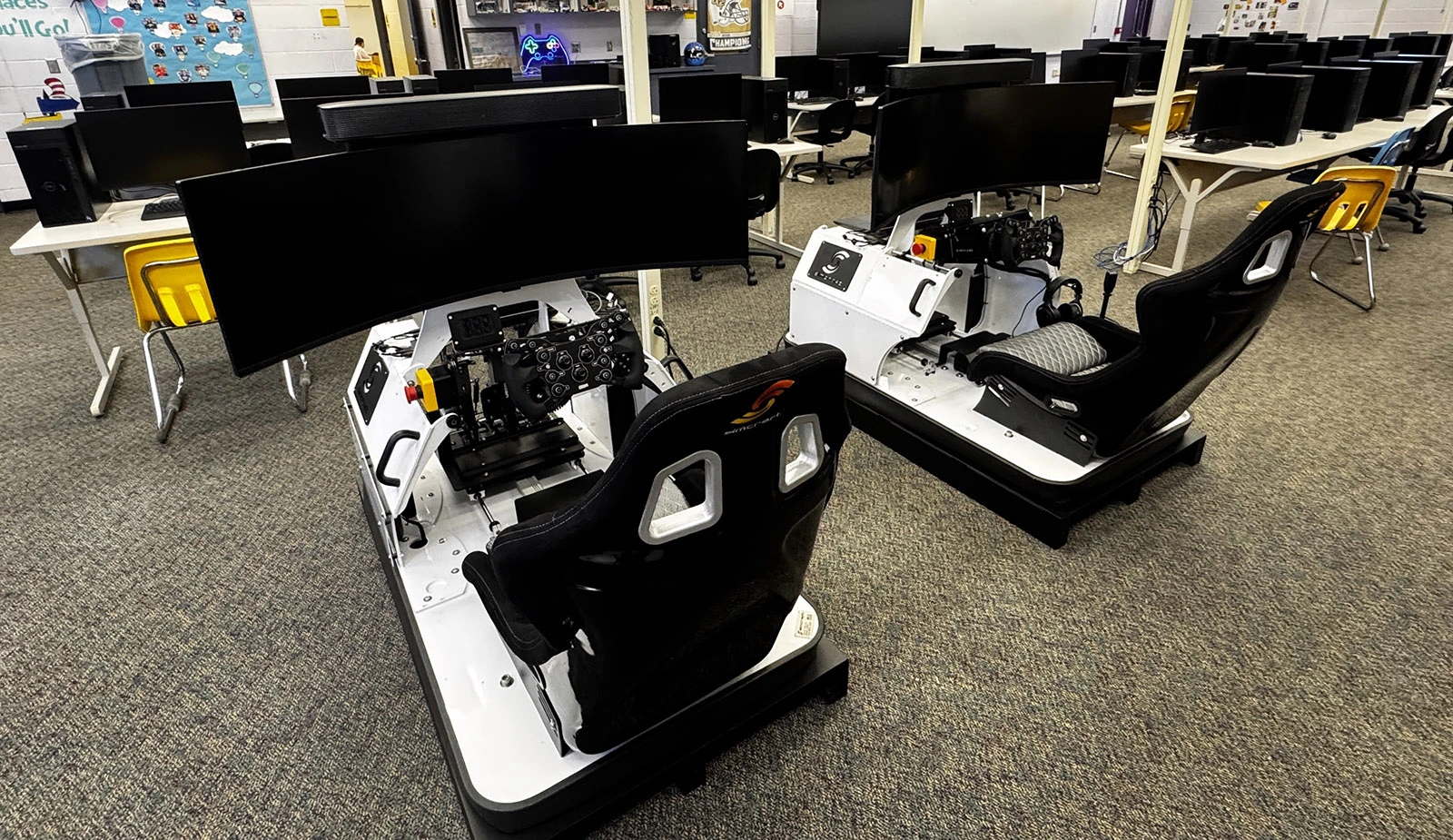
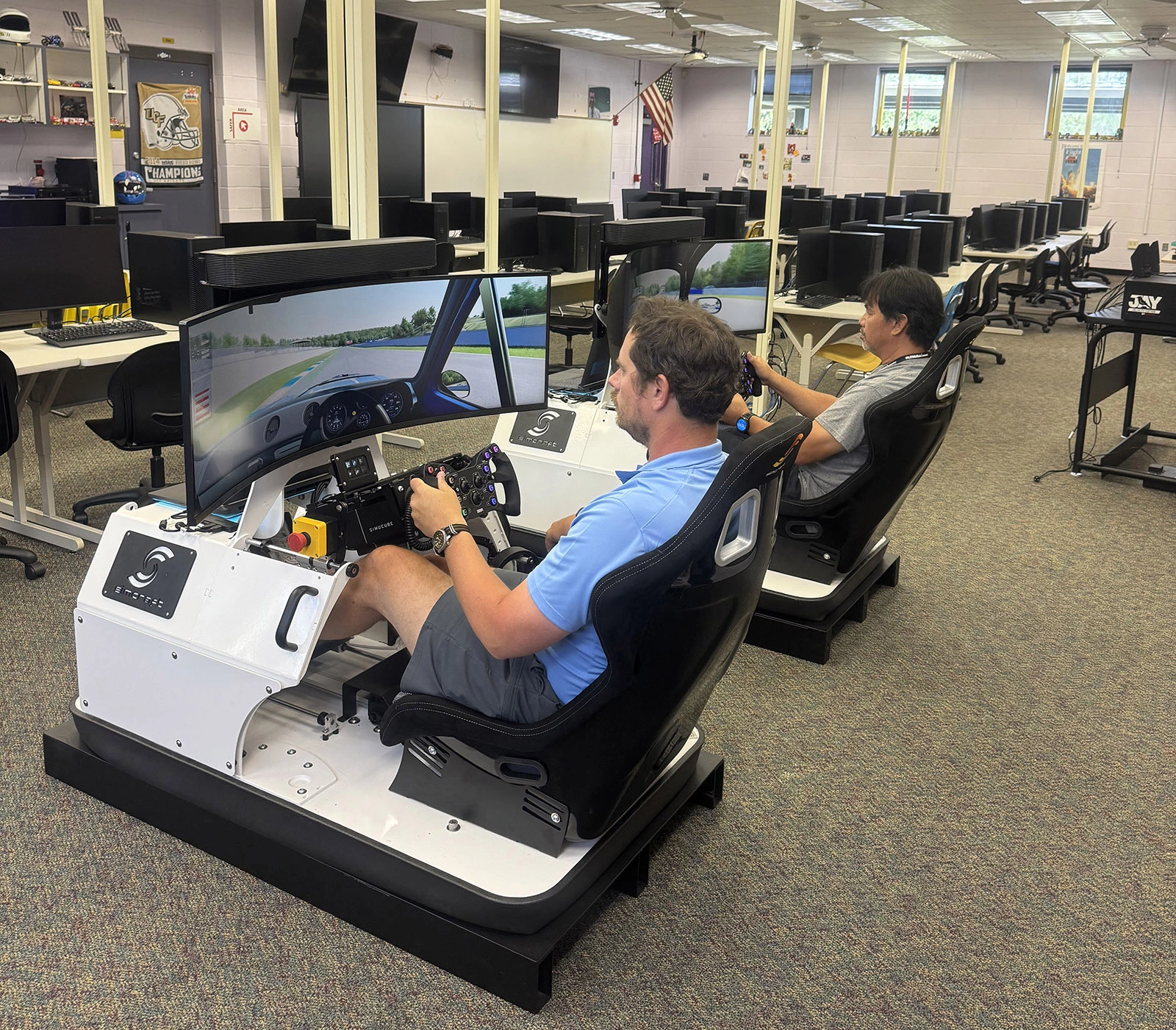
In Brooksville, Florida, a groundbreaking collaboration between SimCraft and Hernando High School is reshaping how students experience technology. At the heart of this partnership are SimCraft GRID1 units, precision-built racing simulators designed for professional motorsports training. Now, these tools are being used to power STEM education with racing simulators, offering students a rare chance to apply classroom theory in an environment that feels more like a professional racing lab than a traditional school.
The GRID1 is not just for virtual racing. In this program, it’s a versatile educational platform, helping students explore the intersection of mechanical engineering, simulation software, and cybersecurity. By engaging with this technology daily, students develop real-world skills that prepare them for careers across the motorsports industry, tech sectors, and beyond.
When students sit behind the wheel of a racing sim like the GRID1, they’re not simply playing a game. They’re interacting with data, understanding vehicle dynamics, and applying STEM concepts to optimize performance—just like professional drivers do in iRacing or Assetto Corsa. This type of hands-on learning transforms the classroom into an arena for experimentation and applied problem-solving.
How Simulation Technology Inspires Students in STEM and Cybersecurity
Under the guidance of Mason Lewis, 2022 Hernando County Teacher of the Year and a 2021 Ron Nieto Digital Educator Award recipient, the simulators are fully integrated into the school’s STEM program. Lewis sees this as more than an upgrade to the lab; it’s an invitation for students to experience the learning process through immersion.
The curriculum ties directly into STEM learning objectives. For example:
-
Students studying automotive systems use telemetry data from the simulators to understand mechanical load, yaw, and tire performance.
-
Cybersecurity classes focus on safeguarding simulation networks, a skill applicable in both tech defense and modern motorsports team operations.
-
School clubs experiment with software modifications to optimize vehicle handling in sim racing, applying programming logic learned about vehicle dynamics.
A racing simulator session often starts with a controlled track lap. The students then analyze their performance data, adjusting driving lines, brake points, or even sim hardware calibration. The feedback loop mirrors the workflow used by professional NASCAR teams, making this more than just classroom theory—it’s education in motion.
As Matthew Nix, SimCraft Partner and Hernando High School alumnus, puts it, “Computer jobs are not just data entry anymore; it’s everywhere.” For students, the simulators are a gateway to understanding how technology powers industries as diverse as esports, autonomous vehicle development, and aerospace engineering.
Building the Future: School Programs that Drive Innovation in Education
The Hernando High School program is more than a one-off upgrade to classroom tools. It represents a deliberate investment in shaping the future of technology education for its students. By embedding SimCraft GRID1 units into daily instruction, the school is building a sustained pipeline for STEM learning that aligns with real industry needs.
From the first session, students are encouraged to think critically, problem-solve, and collaborate. Whether it’s running telemetry analysis on a lap in the simulator, troubleshooting network security for simulation labs, or participating in a high school motorsports challenge, every task reinforces real-world skills that are in high demand. These activities extend beyond the core STEM program, inspiring interest in related fields like software development, data analytics, and even industrial design.
The benefits of hands-on learning extend to extracurricular programs. The school has explored partnerships with local motorsports teams and community organizations to give students exposure to potential career paths. This could mean shadowing a pit crew at a local track, contributing to esports competitions in sim racing, or even volunteering at community STEM outreach events.
The integration of racing simulators also makes it possible to connect with professional organizations such as IMSA for motorsports career insight or local cybersecurity associations for mentorship opportunities. By seeing how classroom skills apply in the field, students develop both competence and confidence.
Why STEM Education with Racing Simulators Works
A key reason this approach succeeds is that it taps into students’ natural engagement with interactive technology. Unlike traditional lectures, simulation immerses learners in situations that require immediate decision-making. The competitive element of improving lap times in a racing sim mirrors the kind of iterative problem-solving they will encounter in technical careers.
The physical feedback from a simulator—precisely aligned with visual and auditory inputs—helps the brain create connections faster. Students are not just memorizing concepts; they are encoding them through direct, multi-sensory experience.
Furthermore, the program builds inclusivity. Some students might be drawn in by the thrill of virtual racing, while others might focus on optimizing simulation software or managing team strategies. The varied entry points mean a wider range of learners can engage meaningfully, from those curious about youth racing to those already considering engineering or cybersecurity pathways.