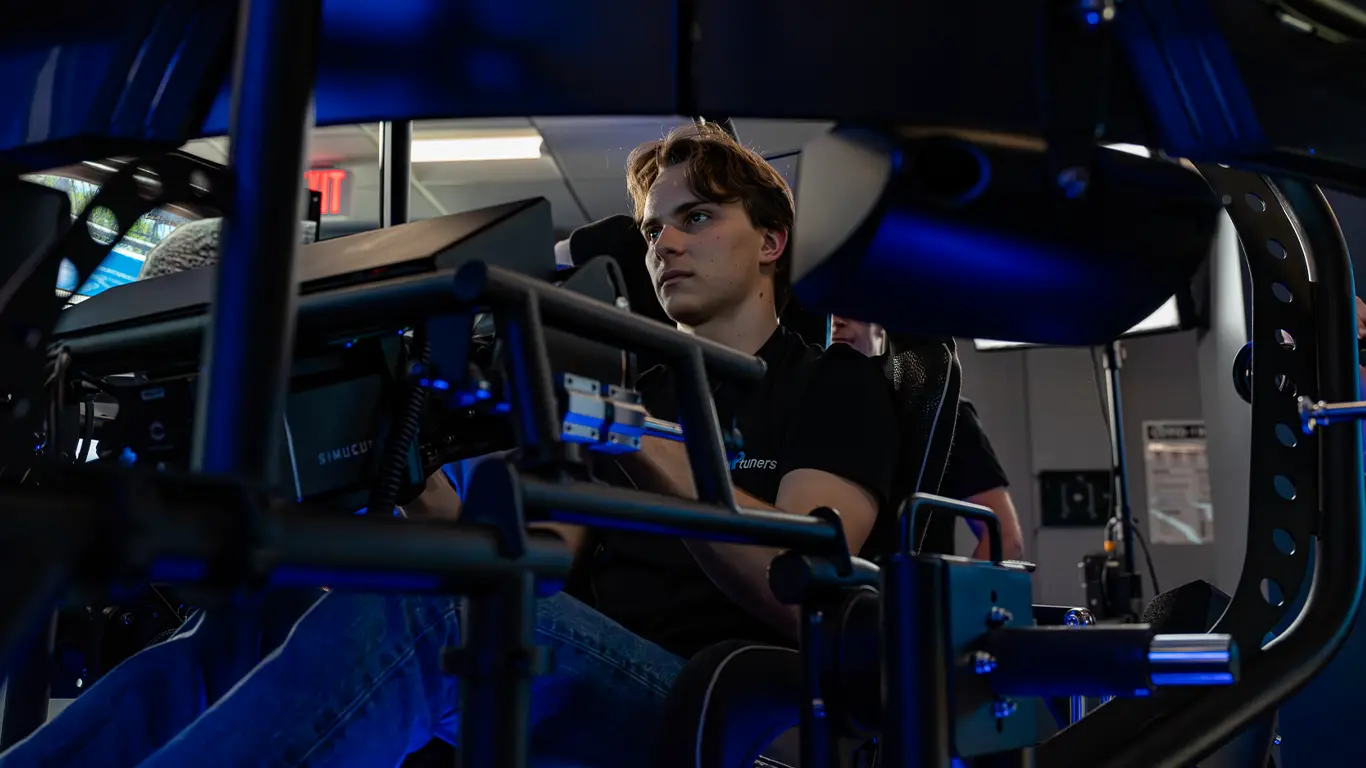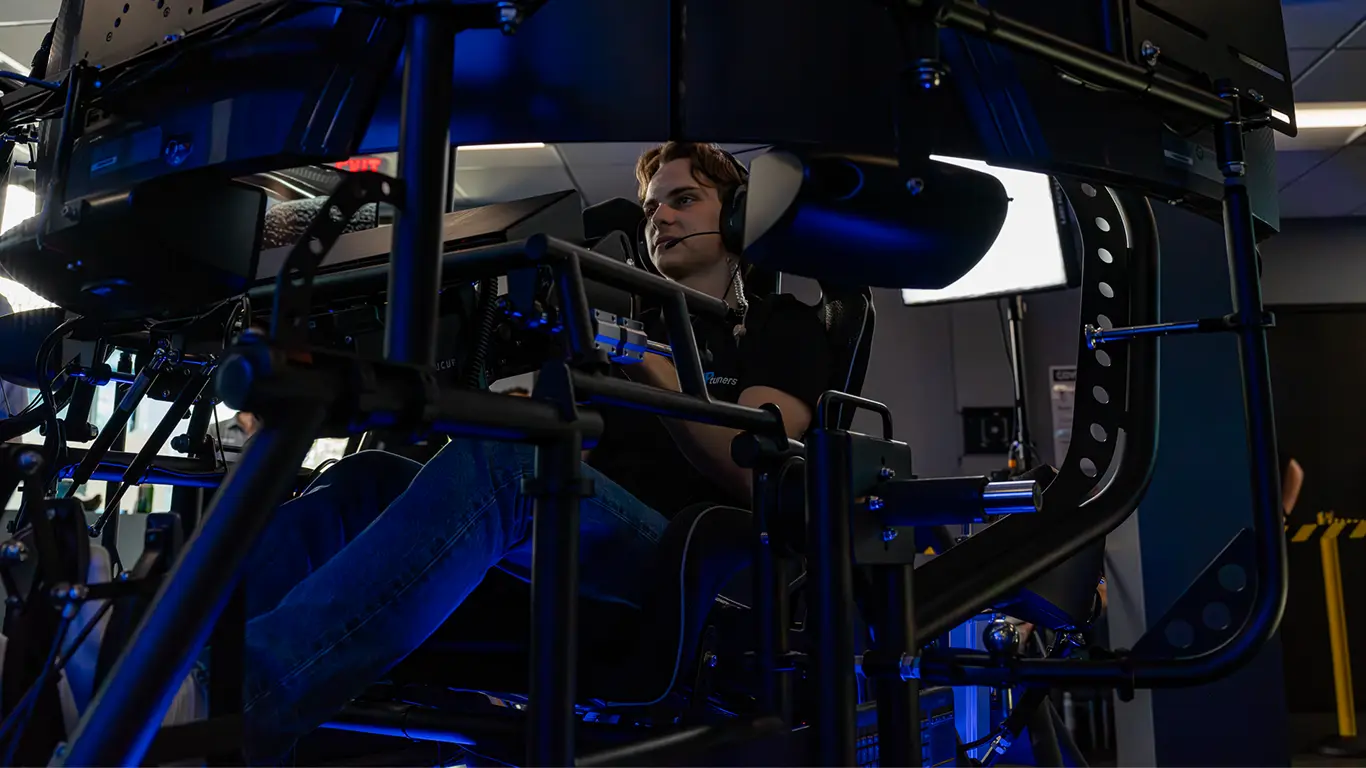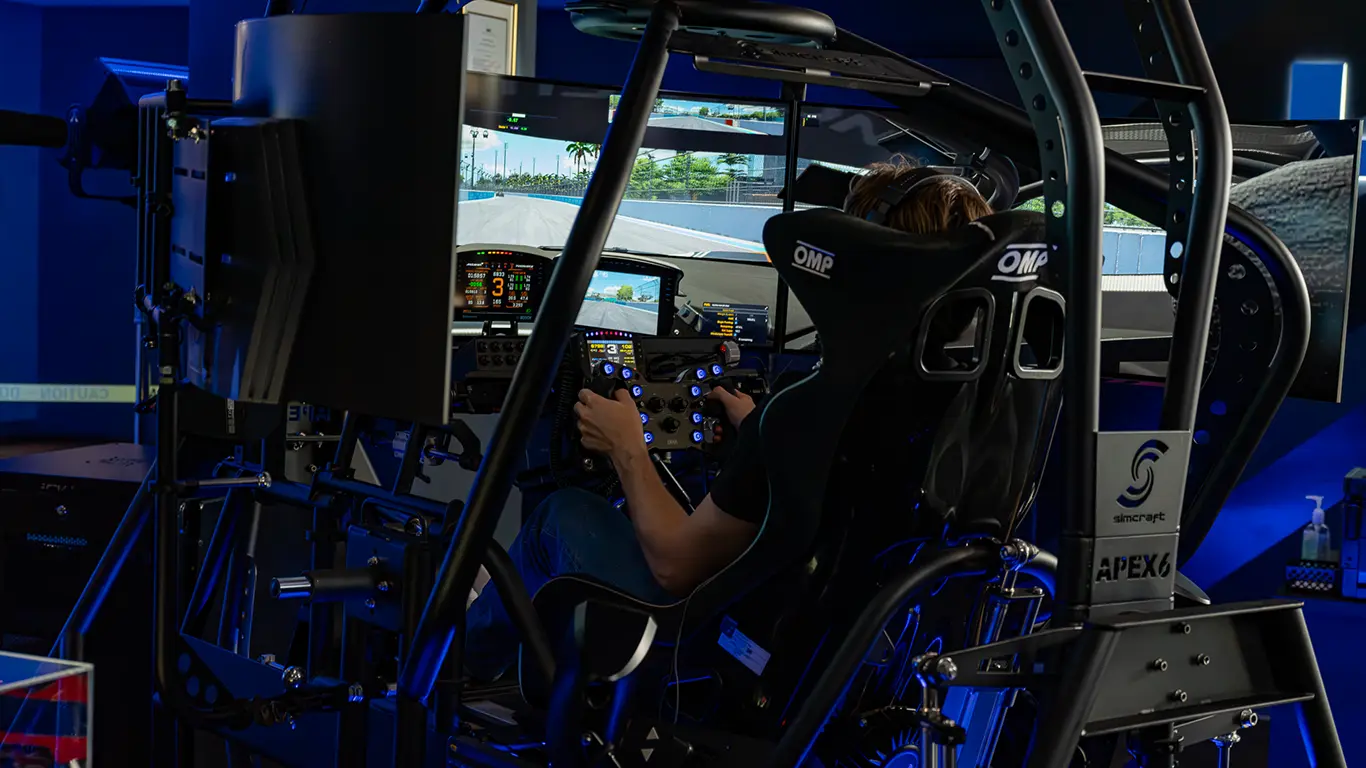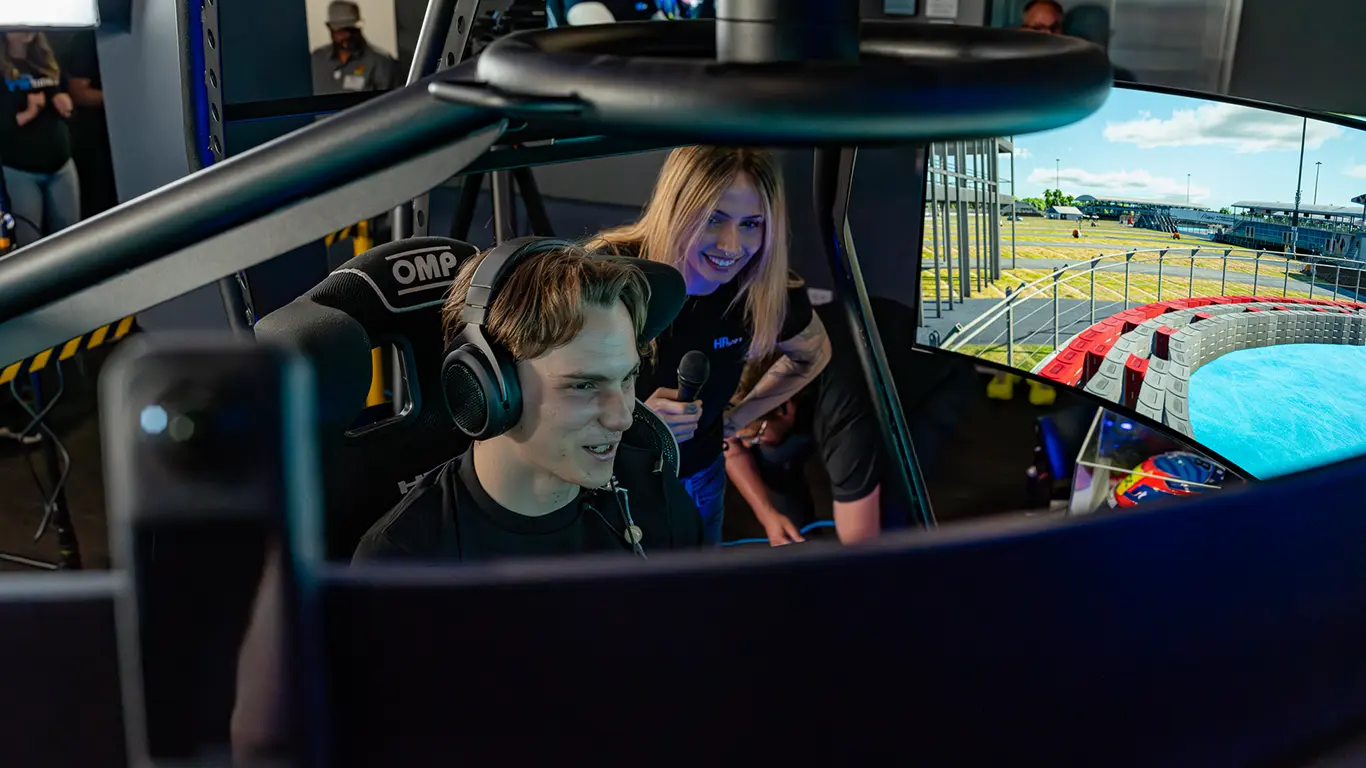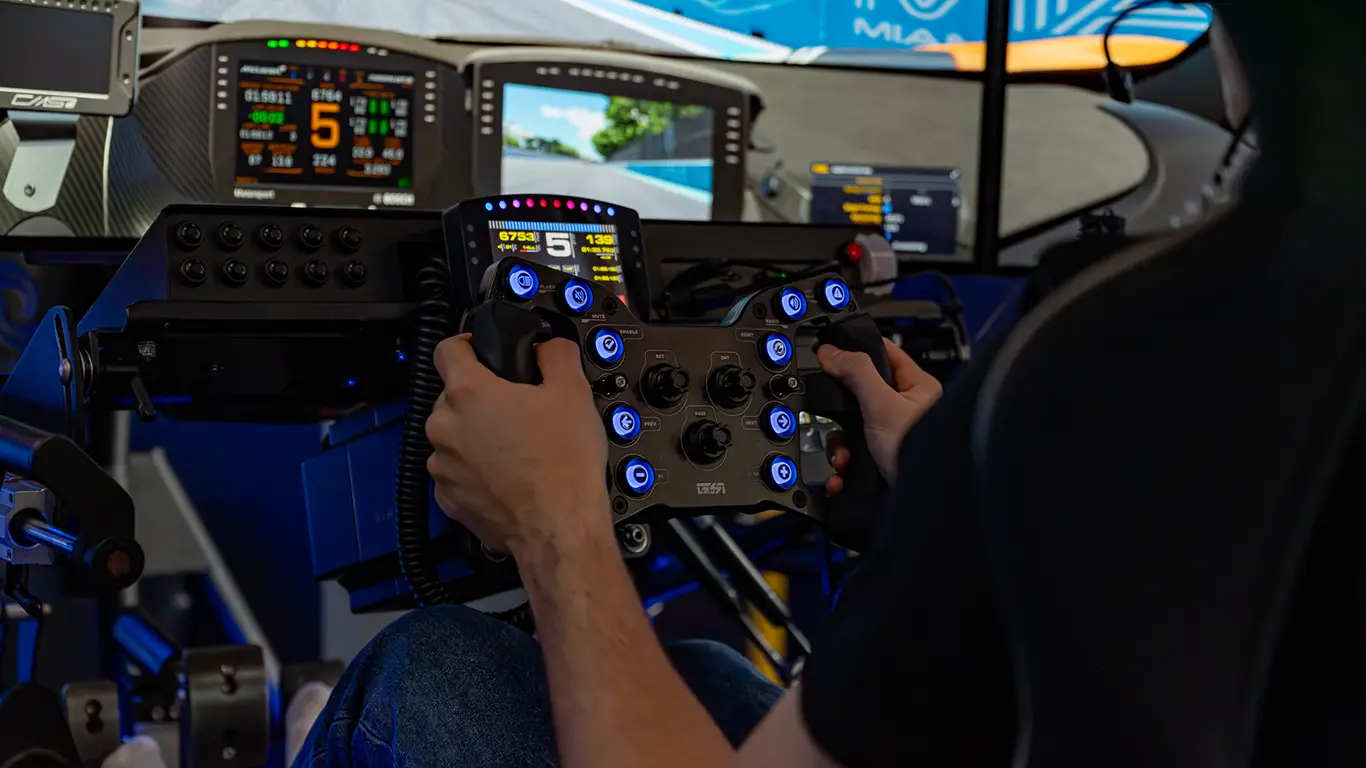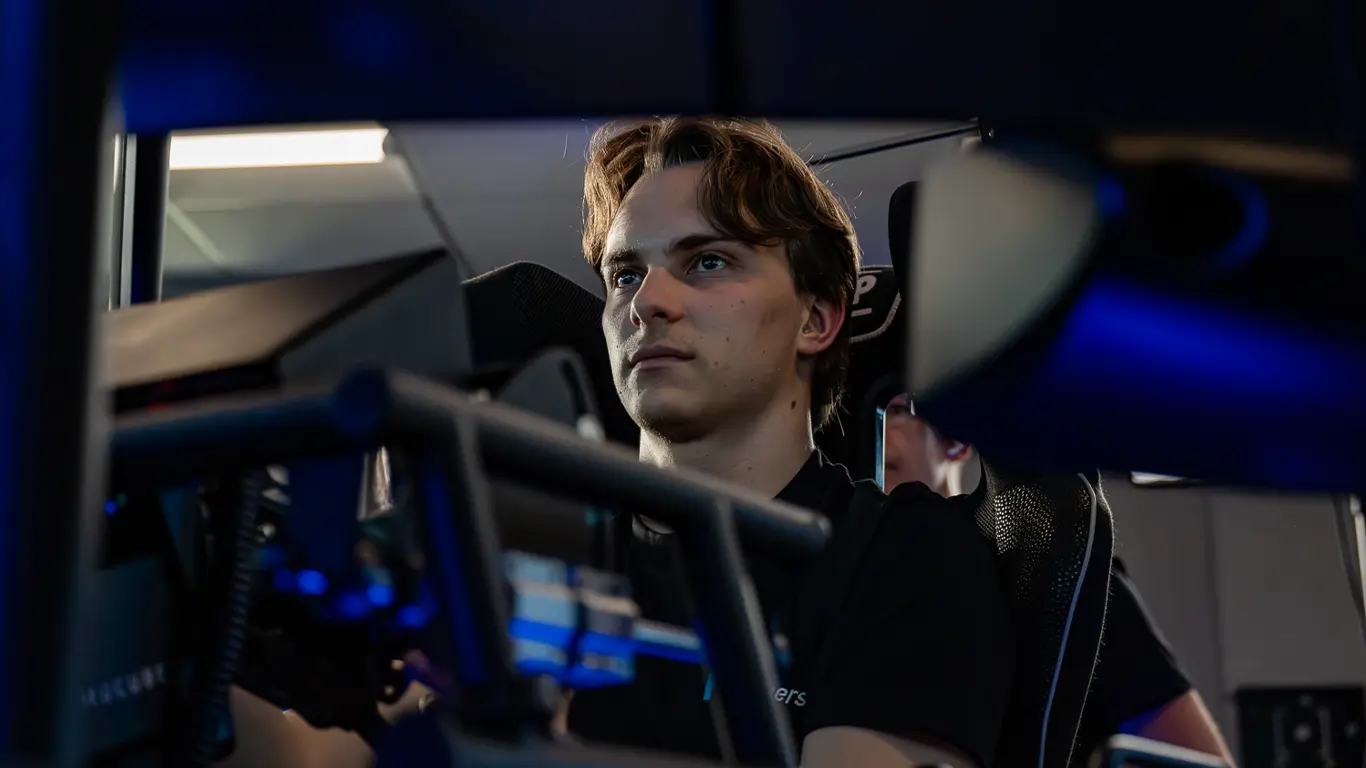
It’s hard to script a better story than the one that played out at HP Tuners headquarters in the Chicago area on Monday, May 4, 2026. F1 was in the USA for the Miami GP that same weekend. The Miami International Autodrome on the grounds of Hard Rock Stadium was full of garages, grandstands, and the usual grand prix circus. And at HP Tuners HQ, Oscar Piastri walked in, sat down in the SimCraft cockpit, and raced thirty of the company’s own community sim racers on the same Miami GP circuit, in the same papaya-colored McLaren GT3 car, on a SimCraft APEX 6 GT racing simulator.
This is the story of the HP Tuners Time Attack Challenge. What it took to qualify. What it looked like to race a Formula One driver. And why HP Tuners chose SimCraft as the Race Partner for the F1 simulator under their co-founder’s son.
Inside the HP Tuners Time Attack Challenge
The HP Tuners Time Attack Challenge was an open call to the company’s community of iRacing drivers. Set the fastest lap in qualifying, earn the right to race Oscar Piastri at HP Tuners headquarters on May 4, 2026. iRacing was the platform. SimCraft was the Race Partner. The full Miami GP layout was the circuit. The McLaren 720S GT3 EVO was the car.
The hook was clean: thirty drivers in, one F1 driver waiting, and a livestream rolling.
The timing was deliberate. F1’s Miami GP weekend put Oscar Piastri on the same continent as HP Tuners HQ for the first time in months, and the Miami circuit he had just scored P3 on already lived inside iRacing as a laser-scanned digital twin. Sim drivers had been lapping that twin for months, and so had every iRacer who entered the Time Attack qualifying window.
The race itself streamed live on YouTube, with the full replay still available on the HP Tuners channel.
From Qualifying to Race Day: How 30 iRacers Earned the Grid
Qualifying ran on iRacing through April 29, 2026. Drivers in the HP Tuners community submitted their best clean lap on the Miami GP full course in the McLaren 720S GT3 EVO. The top thirty advanced. Another ten were named as standby in case anyone in the top thirty couldn’t make race day.
Race day was Monday, May 4. The format was tight: two or three practice laps, a five-to-eight-minute qualifying session inside the live event, and a thirty-minute race. No mulligans. No restarts to bail out a bad opening lap. Just iRacing’s regular race procedure with one extra body on the grid: Oscar Piastri.
The structure rewarded the same things real-world racing rewards. Brake-zone discipline. Patient throttle on exit. Tire management over a thirty-minute stint, when half the grid would push too hard in the opening five minutes and pay for it later. The drivers who’d qualified weren’t tourists. They were the kind of HP Tuners community racers who treat their racing wheel and pedals the way a club racer treats a real-world helmet bag.
For everyone watching the stream at home, the format made the result easy to read. Same car, same circuit, same conditions. If a top iRacer could hold pace with Oscar Piastri inside that window, the matchup was real. And if the gap opened up, that was real too.
Why an F1 Simulator Belonged on the Partner Banner
Pick the wrong rig for an F1 driver and the matchup is over before it starts. A working F1 driver has spent thousands of hours in factory simulators that cost millions of dollars. Their reflexes are calibrated to specific motion cues, very specific brake pressure feedback, very specific yaw response. Drop them into a chair with seat shakers like our competitors and they’re going to feel like the floor is lying to them.
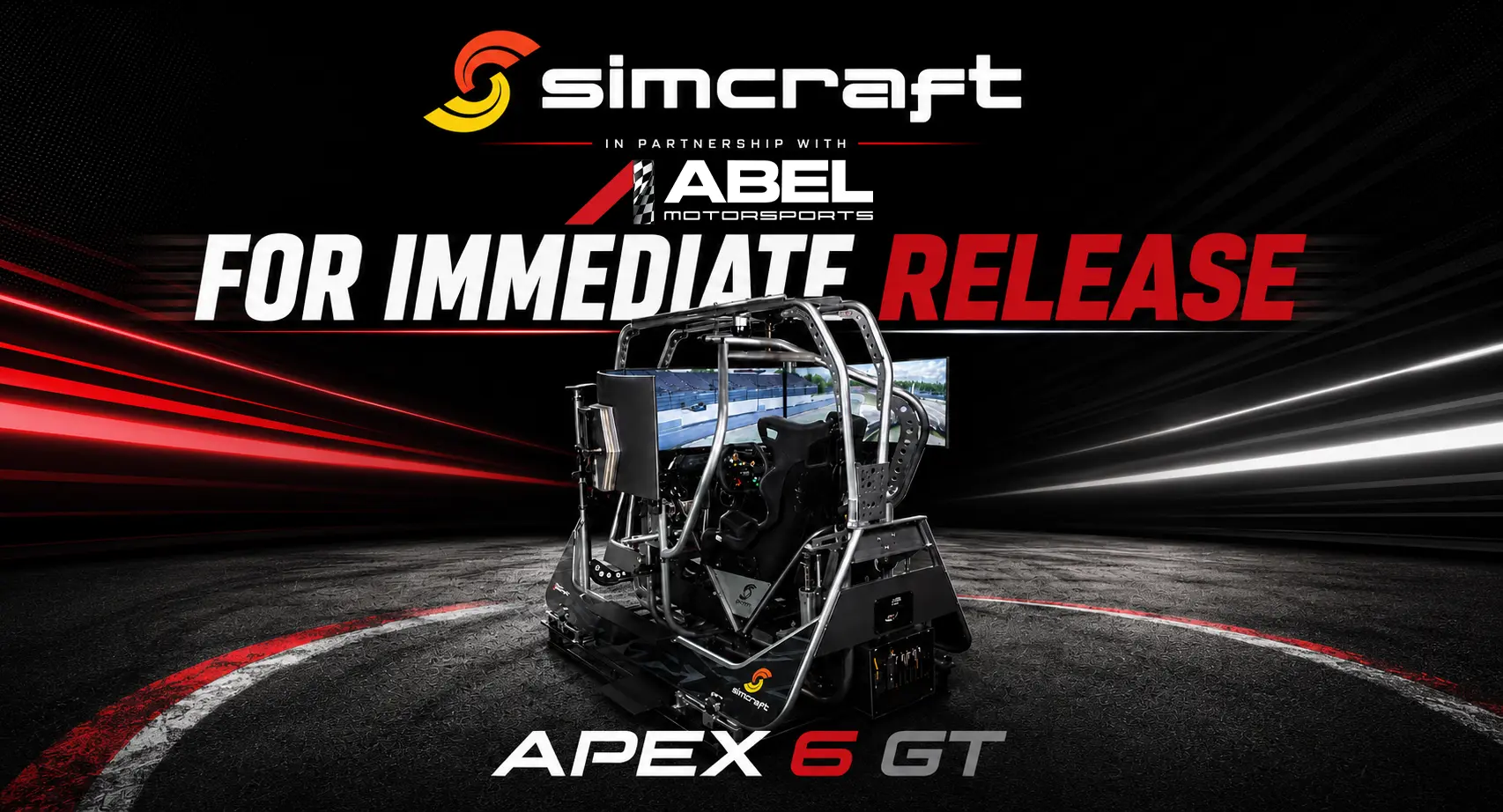
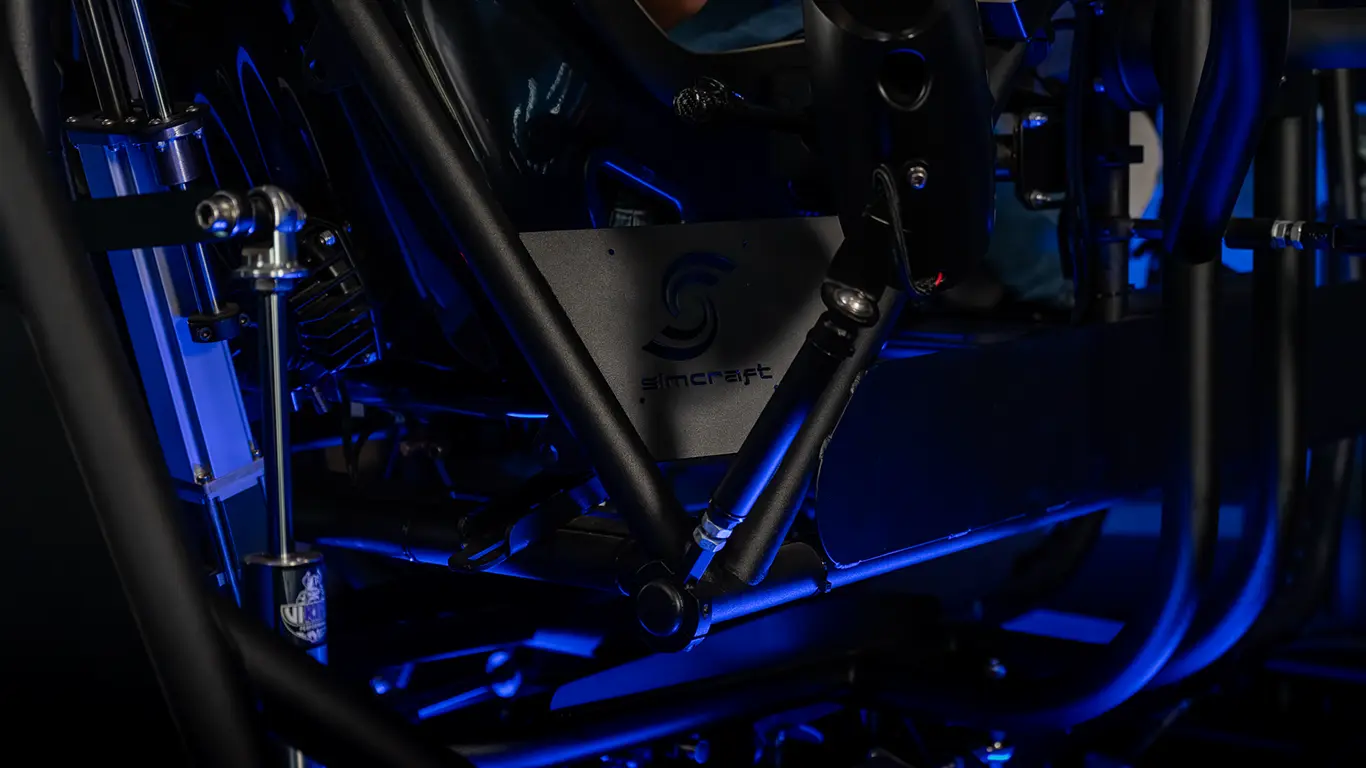
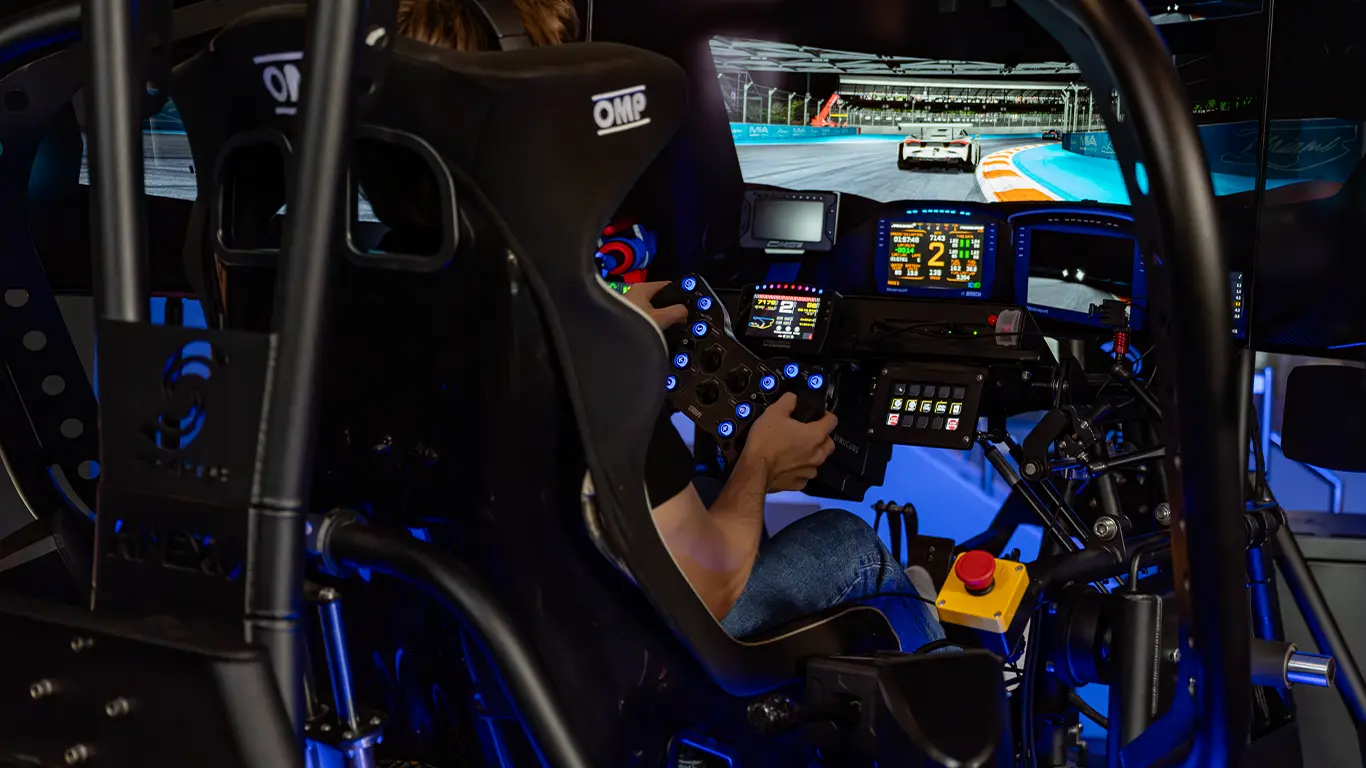
The APEX 6 GT doesn’t lie. It’s a six-degree-of-freedom system, designed for translational seat time: roll, pitch, yaw, surge, sway, and heave, each independently controlled, each centered at the natural center of mass of the vehicle being simulated. That’s the same way a real car actually rotates around its own physics. The science behind that approach was developed by SimCraft engineers working from first principles, and it’s what separates an F1 simulator credible enough for a Formula One driver from a chair that just happens to move.
That pedigree is exactly why the APEX 6 GT earned official NASCAR simulator approval under Section 13.5 of the NASCAR Cup Series rule book. It’s the same rig you’ll find in champion drivers’ homes and inside Garage 1 at the Miami GP circuit, so when HP Tuners decided to put a simulator under Oscar Piastri at their headquarters, the choice made itself.
The professional simulator carrying the SimCraft logo into this event was the full motion APEX 6 GT in ELITE configuration. Rackmount electronics. A 220-degree wraparound OLED visual array running at 240Hz. An FIA-certified seat. A Simucube 2 Pro direct-drive steering wheel with a force feedback system strong enough that it’s measured in Newton-meters, not adjectives. A Gomez Sim Industries wheel that wouldn’t look out of place bolted to a real GT3 car. That’s the simulator HP Tuners wanted for Chris Piastri’s son.
An F1 Driver at His Dad’s Company: Oscar Piastri at HP Tuners HQ
There’s a particular kind of moment that doesn’t make F1 broadcasts very often. A driver, mid-GP weekend, away from the paddock and the media center and the fitness coaches and the strategists, just walking into his dad’s office.
That’s roughly what happened on May 4. HP Tuners HQ in the Chicago area is the kind of building you’d expect from a serious tuning hardware and software company: open floor, dyno bays, more workbenches than offices. Oscar Piastri walked in to race against thirty of the customers his father’s company had been serving for over twenty years.
A son spending a Monday at his father’s company. A father watching his son race the customers his company has built around for decades. A community of HP Tuners enthusiasts who’d qualified with their own laps, sitting at home or in their own setups, all logged into the same iRacing event, all aware of where the F1 driver was sitting.
Inside the Race: 30 iRacers, One F1 Driver, 30 Minutes of Sim Racing
The race itself went where you’d expect a thirty-minute sprint to go. Tight opening laps. A mid-stint settle. A late push from anyone with rubber and fuel left.
The thirty qualified HP Tuners community racers came in fast. iRacing’s top-tier sim racers can hold a benchmark lap to within hundredths over an entire stint, and many of the finalists were that caliber. Every brake zone was contested. Every undercut on a backmarker was a small statement.
Watching Piastri on the SimCraft simulator, what jumped out wasn’t outright qualifying pace. The fastest iRacers were close. What stood out was load. The way an F1 driver releases the brake. The patience he carries with throttle on exit. The way he uses the floor of the corner instead of the apex paint. On a racing simulator tuned to behave like a real car, those subtleties show up immediately, because the platform is rotating around the same center of mass a real chassis would.
By the time the thirty minutes ran out, the leaderboard told its own story. The race didn’t need a script. It just needed a credible field, a credible car, and a credible simulator. Anyone who watched the stream had the answer.
For the full picture, the HP Tuners YouTube channel has the replay.
The Piastri Family and HP Tuners: A Garage-to-Grid Story
HP Tuners is a tuning hardware and software company founded in 2003. Oscar’s father, Chris Piastri, is a co-founder, alongside Keith Prociuk. He also served as Oscar’s kart mechanic during the early national-championship years in Australia. By the family’s own telling, Chris bought Oscar a radio-controlled car after a business trip when Oscar was six. By age eight, Oscar had won the Australian RC national championship. Three years later he was karting. Years after that, he was leading the Formula One World Drivers’ Championship.
Through every step of that, HP Tuners was on his car. Or his suit. Or his helmet.
That’s the backstory worth holding in your head when you watch Oscar Piastri sit down at HP Tuners HQ to race thirty community sim racers. It isn’t a sponsor activation. It’s a company built by a dad watching his son race the customers he built the company around. The HP Tuners community has been on Oscar’s side since long before there was a McLaren contract on the table.
It’s been 13 some years since Oscar has been at HP Tuners with Keith and I. It was a special day for everyone involved, including Oscar. He had a fun day seeing everyone who has supported him since he was just a kid, and of course doing some sim racing, which he loves.
Chris Piastri, Co-Founder, HP Tuners
What a Pro Racing Simulator Means for Driver Development
Twenty years ago, the idea of a racing simulator credible enough for a Formula One driver would have been laughable. Today it’s a Monday afternoon livestream out of a tuning company headquarters in the Chicago suburbs.
That shift is exactly what SimCraft, iRacing, and HP Tuners signed onto when they badged this event together. The technology is now good enough that the gap between an F1 driver and a top iRacer narrows to skill, judgment, and racecraft. Not equipment. Modern racing simulators give amateur racers and pro teams access to the same translational seat time the factory sims deliver, at a fraction of the price.
For drivers at every level, that has practical meaning. A young karter putting in seat time on a SimCraft motion simulator at home is loading the same brake-release patterns he’ll use at a real test day. NASCAR Cup teams running APEX 6 GT racing simulators in their shops are preparing for actual races, not playing video games. A junior single-seater prospect on the Atlassian Williams Driver Academy roster is building neural pathways that survive the transfer to a real car. The driving experience inside the cockpit is dialed close enough to the real thing that the skills carry over.
When a working F1 driver and the top sim racers in a community can sit down and compete on the same iRacing platform, it tells you the simulators are good enough to be trusted. That’s a useful day for everyone in the room.
Sean Patrick MacDonald, Co-Founder and CTO, SimCraft
That’s the broader value of an event like this one. The Time Attack Challenge gave thirty HP Tuners community racers a benchmark. Some of them went home faster. The data they sat next to was Oscar Piastri data, and you don’t unsee that.
The Miami GP Connection: Same Circuit, Different Machinery
The day after climbing onto the real Miami GP podium in third place behind race winner Kimi Antonelli and McLaren teammate Lando Norris, Oscar Piastri sat down to race thirty iRacers on the virtual Miami circuit.
Same corners. Same elevation profile. Same braking points. Different cars, different stakes, different speeds. The iRacing digital twin meant his community matchup happened on a track he’d already built into muscle memory across a season’s worth of preparation. That’s the value of laser-scanned data and a credible sim platform. The track Oscar drove on May 4 at HP Tuners HQ was, in every meaningful sense, the same track he raced for podium points the day before at the Miami International Autodrome.
The real Hard Rock Stadium grounds and the virtual Hard Rock Stadium grounds were the same place that weekend. Just the cars and the cameras changed.
What This F1 Simulator Matchup Means for SimCraft, iRacing, and HP Tuners
The Time Attack Challenge is a small event with a big spec sheet behind it. A tuning company, a sim racing platform, and a motion simulator builder put their names on the same banner because the technology is finally good enough to host this kind of comparison. None of those three could have run the event alone. Together, they made a Monday afternoon at HP Tuners HQ into something a Formula One driver was willing to put his name on.
For drivers, teams, and clubs thinking about what an F1 simulator should look like, Miami GP week made the spec sheet pretty obvious. Independent six-degree-of-freedom motion. Center-of-mass rotation. Real telemetry. Real fidelity. Engineered for performance from the first lap. Built to be tuned, not just turned on.
If you want to see what that looks like in your own shop, the APEX 6 GT is available in BUILDER, STANDARD, and ELITE editions, with white-glove installation for teams that want it set up the way HP Tuners HQ was set up for Oscar Piastri. Get in touch if you’d like to talk through a build for your team, club, or shop.
FAQ
What was the HP Tuners Time Attack Challenge?
It was an iRacing-based competition hosted by HP Tuners. Drivers in the HP Tuners community qualified through April 29, 2026, on the Miami GP full course in a McLaren 720S GT3 EVO. The top 30 advanced to a live race against F1 driver Oscar Piastri on May 4, 2026, with another 10 named as standby. iRacing and SimCraft were the named race partners.
Where did the race take place?
The live race was held at HP Tuners headquarters in the Chicago area. Oscar Piastri raced from a SimCraft APEX 6 GT F1 simulator at HQ, while the qualified HP Tuners community drivers raced from their own iRacing setups. iRacing connected the field on the Miami GP virtual circuit.
Why was a SimCraft APEX 6 GT used as the racing simulator for this event?
The APEX 6 GT is a six-degree-of-freedom full motion racing simulator with independent roll, pitch, yaw, surge, sway, and heave, all centered at the vehicle’s natural center of mass. That fidelity is the standard expected by working F1 and NASCAR Cup drivers, and it’s the kind of simulator HP Tuners wanted on the partner banner when the prize was racing an F1 driver. Plus, they raced GT cars.
What is Oscar Piastri's connection to HP Tuners?
Oscar’s father, Chris Piastri, is a co-founder of HP Tuners. He served as Oscar’s kart mechanic during his early Australian national karting career, and the company has supported Oscar’s racing career since the very beginning, through karting, the junior formulae, and into Formula One with McLaren.
Where can I watch the replay?
The HP Tuners Time Attack Challenge race against Oscar Piastri streamed live on YouTube on May 4, 2026. The full replay is available on the Click Here