A Ski Slope Slip and a Race Against the Calendar
On December 18, 2025, Brad Keselowski stepped onto a patch of ice at a ski resort and ended his off-season in a single second. The fall fractured his femur, the largest bone in the human body, and required surgery with significant orthopedic hardware. Femur fractures of that severity typically demand 6 to 12 months of recovery before an athlete returns to high-impact activity, according to guidelines from the American Academy of Orthopaedic Surgeons.
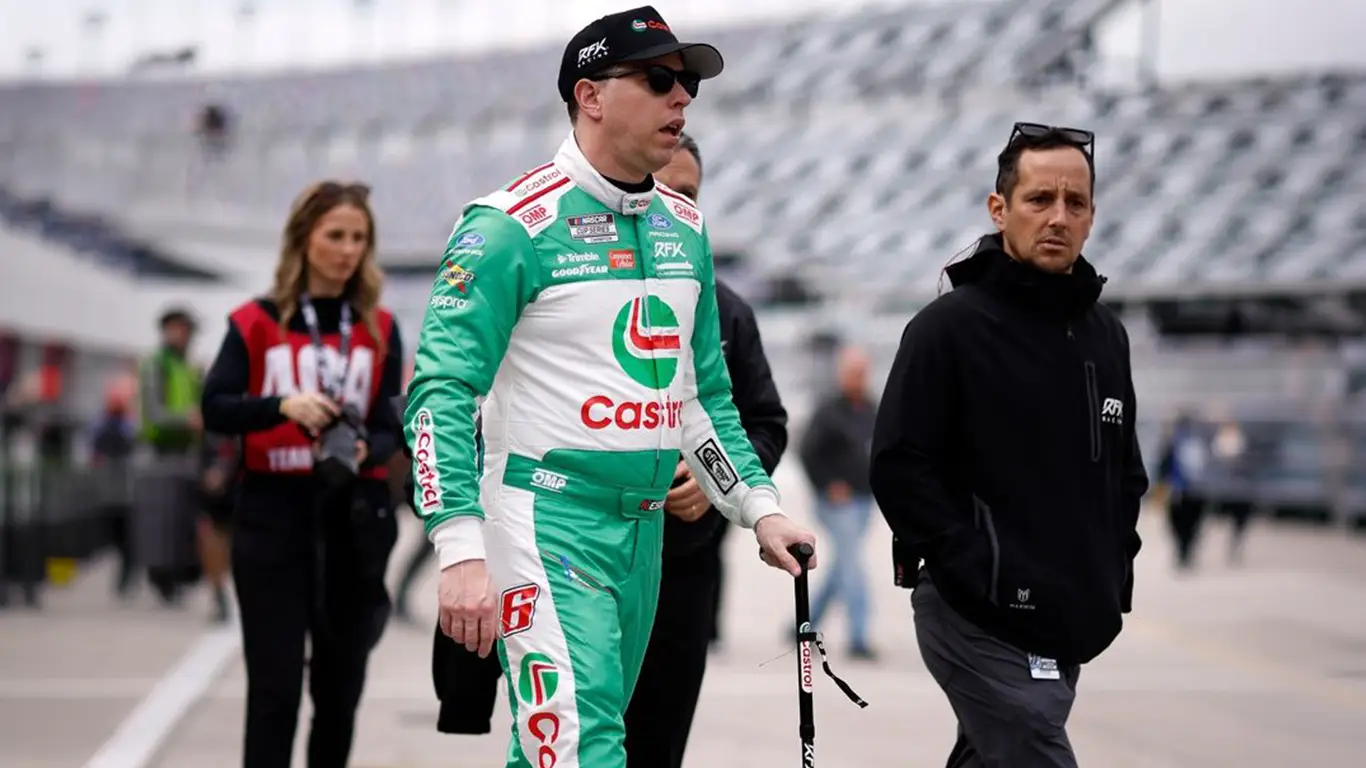
Brad’s calendar said something different. The Daytona 500 was scheduled for February 15, 2026, which gave him exactly 8 weeks to go from surgical bed to the front stretch of the most demanding superspeedway race on the schedule. He spent most of those weeks housebound, walking with a cane. The driver’s seat itself was manageable. The peak physical loads of a Cup car at Daytona, with sustained Gs through the banking and the constant bracing required for pack racing, were not.
That mismatch defined the problem. He couldn’t show up at a track for shakedowns. He couldn’t get reps in a teammate’s car. He couldn’t fly to a private test day on crutches and expect his body to absorb 200-mph loads. He needed seat time that didn’t punish a healing leg. He needed it now, and he needed it where he was: at home.
This is the story of how a home racing simulator filled that gap, what it actually took to make it work, and why a Cup-level driver chose this path instead of waiting it out.
Why a Pro Can’t Just Wait Out Recovery
There’s a tempting assumption that pro drivers can take a few months off, lift some weights, and pick up where they left off. That misunderstands what happens to a racing driver during inactivity. Reaction calibration, vestibular tuning, eye-hand timing, the unconscious throttle modulation that takes years to build: all of it begins to slip within weeks. For a driver competing at the very front of the field, where decisions happen in milliseconds and grip windows are razor thin, slipping is losing.
While Brad was housebound, the rest of the field wasn’t. Other Cup drivers were running ARCA events, late-model races, and private tire tests. Some logged track days at road course test facilities. A few worked the off-season the way they always do: a steady drumbeat of car time, layered with engineering meetings and data review. Brad couldn’t do any of that without compromising his recovery.
The training problem isn’t only physical. A Cup driver is, in the most literal sense, a high-performance athlete whose primary instrument is feel. Take that instrument out of the loop for 8 weeks and the wiring atrophies. Reps matter. Repetition under realistic feedback matters more. The longer the gap, the deeper the deficit, and the harder it gets to claw back when race weekends start coming fast.
So the question Brad’s circle had to answer wasn’t whether to train. It was how to train when on-track time and real car g-loads were both off the table. The answer needed to give him purposeful inputs, accurate cues, scenario repetition, and procedural rhythm without the bracing demands of a real chassis. The answer needed to fit inside his house, work on his timeline, and deliver results good enough for Cup-level racing.
The Christmas Eve Call That Set Everything in Motion
It started, as a lot of pivotal stories do, with a phone call nobody planned for. On Christmas Eve, TJ Majors, the veteran NASCAR spotter and longtime driver-performance resource who’s worked with several Cup-level athletes, reached out to SimCraft. The request was direct: Brad needed an at-home solution, and he needed it deployed fast.
“Driver development and readiness do not stop when an athlete is sidelined. Our Christmas Eve call with TJ Majors set things in motion quickly. Within days we had a defined plan to put an APEX 6 GT motion simulator in place. From there, we tuned the motion cueing specifically for Brad so the car behavior and feedback felt natural and familiar.”
TJ Halsema, Director of Driver Development, SimCraft
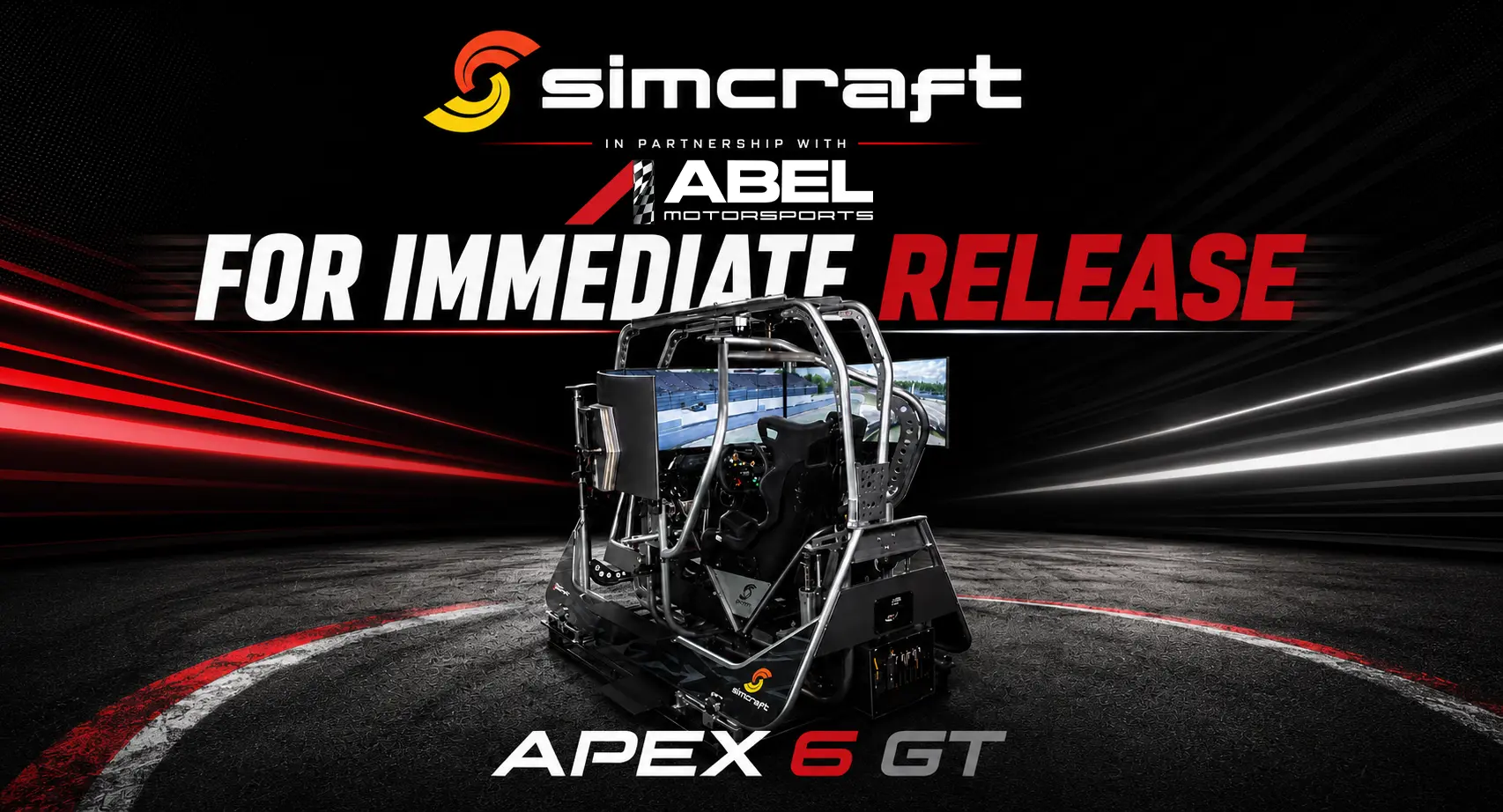
By December 27, the plan was locked. An APEX 6 GT, the same platform that earned official NASCAR Cup Series approval under Section 13.5 of the rule book, would be deployed to Brad’s home. A SimCraft engineering team led by TJ Halsema would handle personalized motion cueing. Sourcing, logistics, and a custom commissioning timeline were assembled in parallel. The goal wasn’t just to put a piece of pro-grade hardware on the floor. The goal was to recreate the feel of his Cup car, in his living space, calibrated to his preferences, ready to absorb daily reps from the moment it was switched on.
That kind of turnaround, from late-December cold start to a fully personalized professional setup ready for a recovering driver, is uncommon in this industry. It happened because the request was clear, the platform existed, and the team behind it was built for exactly this kind of high-stakes deployment.
The Motion Simulator That Showed Up at Brad’s House
The system that arrived at Brad’s home was an APEX 6 GT full motion racing simulator, the flagship of SimCraft’s racing simulators lineup. It’s the same architecture chosen by Legacy Motor Club after SimCraft earned official NASCAR simulator approval for Cup Series teams in January 2025. Six independent degrees of freedom: roll, pitch, yaw, sway, surge, and heave. Each axis controlled separately, each motion happening exactly when and how it would in a real car.
That distinction matters more than it sounds. Most motion simulator products on the market use brute-force actuators that push the chassis from fixed corner points, which produces blended, mechanically linked movement that arrives slightly late and feels slightly wrong. The APEX 6 GT rotates the cockpit around the driver’s natural center of mass, the same way physics rotates a car around its actual axis. The result is feedback from your inner ear, neck, and lower body all read as authentic.
Pair that motion architecture with software-agnostic compatibility, including iRacing for accurate Cup, ARCA, and Xfinity content, and you get a tool that recreates Brad’s competitive environment with a fidelity that researchers at Michigan State University’s Spartan Motorsport Lab have measured at roughly 90% similarity to real-world GT3 driving in heart rate, workload, and visual tracking patterns.
For a driver looking to maintain Cup-level racing sharpness without leaving the house, that fidelity is the entire point.
Tuning the Seat, Cueing, and Car Feel for One Driver
Hardware showing up is the easy part. What separates a pro deployment from a hobbyist install is what happens after the system is bolted to the floor. SimCraft’s engineering team, led by the Director of Driver Development, TJ Halsema, spent significant time personalizing the motion cueing to Brad’s preferences and to the specific feel of his Cup car.
That tuning covered every meaningful axis of the driving experience. Yaw response was matched to the rotation rate Brad expects when the rear of his Cup car steps out under throttle. Pitch was calibrated to mirror the load he reads through the brake pedal during corner entry. Roll was set to communicate left-side weight transfer the way a banked oval loads it. Load transfer cueing, the subtle motion that tells a driver whether the car is on its springs or floating, was matched against his vehicle feel targets across multiple track types.
The fiberglass racing seat itself was set to put Brad in the same position he sits in at the track, with steering wheel reach, pedal angles, and shoulder placement dialed to factory ergonomics. Even the smaller parts and accessories that round out the experience, the haptic transducers, the auxiliary button box, and the integrated dashboard, were configured to map his real on-car switch logic so muscle memory transferred cleanly between simulator and real chassis.
The analogy that fits best here is a concert violinist whose primary instrument is being repaired. You don’t hand them a different instrument and tell them to practice. You hand them an exact replica, in the same key, with the same string tension. That’s what personalized motion cueing does for a driver: it preserves the instrument so the muscle memory keeps building instead of decaying.
What Makes a Professional Racing Simulator Different
The market is full of products that call themselves a racing simulator. Most of them aren’t. They’re entertainment platforms with a wheel attached, built around the assumption that motion is an effect rather than a training input. A wheel and a gaming monitor on a desk can be fun. They can’t teach a Cup driver anything his nervous system doesn’t already know, and they can’t deliver the kind of performance gains a recovering pro actually needs.
The line between a professional racing simulator cockpit and the rest comes down to whether motion is physics-correct. SimCraft’s center-of-mass architecture doesn’t approximate a car’s behavior, it replicates it. That’s why research at MSU found that SimCraft systems produced measurable gains in lap-time progression and cognitive engagement compared to seat-mover style platforms, while seat movers actually fatigued drivers and slowed learning. Wrong feedback isn’t neutral, it’s harmful. Right feedback compounds. The science of driver development with motion simulators backs this up across years of research.
For Brad’s recovery use case, the difference is even sharper. A driver healing from major surgery needs reps that load the brain without overloading the body. Motion haptics tuned correctly do that work, communicating grip state, slip angle, and load transfer through the platform itself. Visuals alone can’t deliver it. Static rigs definitely can’t. Translational seat time is the term SimCraft uses for practice that actually transfers from screen to track, and it only happens when the physics underneath are right.
This is the same standard that’s earned trust from Legacy Motor Club, Wayne Taylor Racing, and the dozens of pro drivers featured in Champions’ Testimonials, as well as elite formula and stock car programs. When a Cup-level pro decides to buy access to that kind of simulation, they’re not buying a toy. They’re buying time, and time is the one thing a recovering driver can’t manufacture any other way.
From a Sim Racing Rig to the Daytona 500
Eight weeks. That was the gap between Brad’s surgery and the green flag at Daytona. He spent it working through structured sessions on the APEX 6 GT, building back the timing and procedural rhythm that the calendar had threatened to take from him. Track familiarization. Restart sequencing. Pit road approaches. The feel of pack air at superspeedway pace. Every input his body needed to remember, every cue his eyes needed to re-sync, came through the sim racing rig in his home rather than a Cup car he wasn’t ready to drive.
On February 15, 2026, he was on the grid at the Daytona 500. Eight weeks post-surgery, returning to a race that punishes any driver, healthy or not. He raced the field. He completed the event. He proved that the path he’d taken, sim-led recovery instead of total rest, worked under the most extreme test the calendar had to offer.
Here’s what Brad himself said about it:
“Huge thanks to SimCraft and TJ for stepping up and helping me stay in the game. When you can’t be at the track, having something this dialed-in at home is a game changer. The sim industry is evolving fast, and it’s becoming an essential part of how we train, prepare, and even recover. This was a great example of that.”
Brad Keselowski
That last sentence is worth re-reading. He’s not pitching it as a rehab tool or a one-off Hail Mary. He’s describing the natural next step in how Cup-level performance training is going to work, full stop. Recovery, prep, and skill maintenance are converging into a single home-based discipline, and the simulation is the thing that ties them together.
What This Says About Where Racing Simulators Are Headed
Brad’s eight-week comeback is one data point. It’s also part of a larger pattern that anyone watching the sport closely has already noticed. Skip Barber Racing School integrated SimCraft into its driver development curriculum in 2025. Legacy Motor Club, Alpha Prime Racing, and Riley Technologies all run SimCraft platforms in their performance pipelines. Karting graduates, formula-class hopefuls, and seasoned Cup champions are all training on the same fundamental architecture, scaled to their needs.
The takeaway is simple: motion simulation has crossed from supplementary tool to primary training infrastructure. The reasons aren’t mysterious. Track time is expensive and weather-dependent. Physical setbacks happen. Schedules tighten. The simulator goes when the driver can go, in any weather, at any hour, with no fuel burn and no risk of damaging a real chassis. Whether you’re a NASCAR Cup veteran returning from injury, a young driver chasing your first formula seat, or a club racer trying to compress your learning curve, the math has changed. There’s now a piece of equipment that lives at home and produces measurable, transferable gains.
The other shift is accessibility. SimCraft’s full lineup, including the compact motion racing simulator APEX CT and the esports motion racing simulator GRID1, means a Cup-grade architecture is no longer reserved for race shops with budgets in the millions. The same physics engine that powered Brad’s recovery scales down to a garage installation for a privateer or a single-bay sim center. Every STANDARD and ELITE Edition arrives turn-key with all critical parts and accessories pre-configured, and SimCraft also handles white-glove installation so the system is ready to deliver elite-level training from day one.
Brad’s story isn’t an outlier. It’s the early version of how the next decade of driver development is going to look. Drivers will train where they live. They’ll rehab through structured sim time. They’ll get sharper between race weekends instead of going quiet. The teams and athletes who build that into their routine first are the ones who’ll set the new benchmark for what Cup-level preparation looks like.
FAQ
Can a home racing simulator really substitute for on-track training?
For specific training objectives, yes, with the right hardware. A professional motion simulator delivers physics-accurate cues that build the same neural patterns as on-track driving, a concept SimCraft calls translational seat time. Research at Michigan State University’s Spartan Motorsport Lab measured roughly 90% physiological similarity between SimCraft sessions and real GT3 driving. It doesn’t replace seat time at the track entirely, but it absorbs a meaningful share of the prep, recovery, and skill-maintenance work that used to require travel.
Why did Brad Keselowski choose an APEX 6 GT specifically?
The APEX 6 GT is the SimCraft platform officially approved by NASCAR for use in the Cup Series under Section 13.5 of the rule book, and it’s already deployed at teams like Legacy Motor Club. Choosing it meant Brad was training on the same architecture his peers and competitors use at their shops, with no compromise in fidelity, motion accuracy, or vehicle correlation.
How long does it take to set up a system like Brad's?
In Brad’s case, the timeline from initial Christmas Eve call to a defined deployment plan was three days, with personalized motion cueing performed by SimCraft’s engineering team on site. SimCraft offers white-glove installation as a standard option to ensure the system is configured, calibrated, and tuned to the driver’s preferences before the first lap.
Is a SimCraft system only useful for professional drivers?
Not at all. Professional teams choose SimCraft because the physics are correct, but the same accuracy benefits any driver trying to compress their learning curve. SimCraft offers scaled platforms, including the APEX CT and the GRID1 yaw simulator, for privateers, sim racers, and developing drivers. The underlying motion architecture is shared across the lineup.
Can a simulator help with injury recovery?
It can, when used appropriately. A motion simulator like the APEX 6 GT lets a recovering driver maintain reaction timing, vestibular calibration, and procedural rhythm without the peak G-loads of a real race car. It’s not medical equipment and shouldn’t replace professional rehabilitation, but it solves the parallel problem of competitive readiness during the recovery window. Brad’s eight-week return to the Daytona 500 is a strong real-world example of how that combination can work in practice.